Biophilic Design: How to Grow Urban Spaces with Nature

Biophilic design has been gaining interest within the construction and urban planning industries. Trying to incorporate nature into buildings and public spaces intends to promote people’s health and wellbeing, as well as create spaces with sustainability built-in.

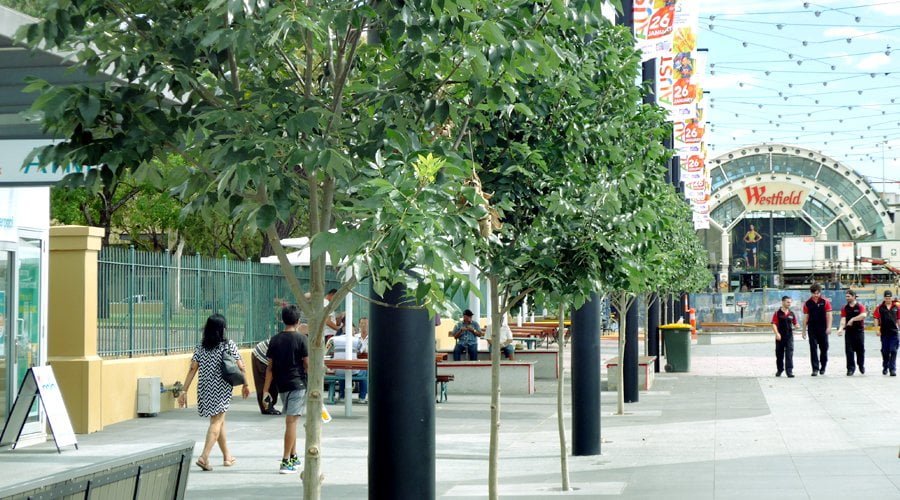
An example of Biophilic Design in urban planning

In recent years, numerous researchers have discovered solid connections between more time spent in nature and better physical and mental health.

Nature’s effectiveness for mental health is especially promising, as mental health problems account for as many as one in three cumulative years that people live with a disability. The toll of mental health issues on the population as a whole is similar to that of cardiovascular disease and circulatory disorders.

The biophilic design offers to help people get more exposure to nature by bringing nature into cities, buildings, and public spaces.

See Related: 10 Principles for Better Urban Renewal for Public Spaces

Some environmental engineers, such as Princeton University’s Anu Ramaswami in an interview with New Scientist recently, argue that green public spaces are just as important parts of city management and urban planning as shelter, water, food, energy, connectivity, and sanitation. People in cities all need these things to live healthily.

What is Biophilic Design?

daniel sessler xOwotZP8yZk unsplash Biophilic Design Citygreen

Biophilic Design is an innovative design approach that integrates natural elements into the built environment to enhance well-being and connection people have with nature.

The biophilic design borrows concepts from biologist Edward O. Wilson. Wilson posited the “biophilia” hypothesis in 1984. He believed that our brains have been shaped by the environment we evolved in, primed by it to respond well to cues that would help us with survival.

Natural objects like trees, savannahs, lakes, and waterways help to mark locations that would provide our basic needs such as food, water, and shelter. In the first 294,000 years of our existence as a species, we always lived outside of cities.

When we eventually started building cities around 6,000 years ago, our brains still craved seeing and being near these natural markers of survivability in the environment. In fact, as a species, we have only become predominantly urban dwellers in the last few decades. But, by 2050, this will likely increase to around 70% of the world’s population living in cities.

The biophilic design tries to tie these two phenomena together: biophilia causing our brains to favour natural environments, and increased urbanization taking more of us outside of natural environments and into man-made environments.

Biophilic design focuses on including natural objects like trees, waterways, and plants in public spaces. Natural shapes like curves, irregular arcs, and shapes that mottle light are also used in exteriors and interiors of biophilic buildings to appeal to us.

This is supported by recent science. In a 2019 study led by the University of Exeter, UK, researchers found that between 120 and 200 minutes of recreational contact with nature each week was associated with good health or wellbeing. The study involved almost 20,000 participants from around England.

However, biophilic designs and time in nature may not be helpful for everybody. It is important to note that the majority of research into nature’s effects on wellbeing has been conducted in Western societies. Mental health benefits from accessing nature are probably influenced by a number of factors that include age, gender, personality, socioeconomic status, and culture.

Key Principles of Biophilic Design

  • Nature Analogues
  • Natural Light and Views
  • Living Systems
  • Evoking Nature’s Shapes and Form
  • Multi-Sensory Experiences

paul hanaoka kNgDbdFbx68 unsplash Biophilic Design Citygreen

Biophilic Design Examples in Urban Planning and Construction

ricardo gomez angel WsEAiVwGrwo unsplash Biophilic Design Citygreen

Some buildings, such as One Central Park in Sydney, Pasona Group Offices in Tokyo, and Bosco Verticale in Milan, feature biophilic design by incorporating plants, trees, and living walls into their exteriors, interiors, and built environment on ground level.

Urban areas have for many years been subject to beautification schemes including bringing nature back into the urban environment. An early example in the UK is the Garden City movement in the early 1900s, but the recent announcement that France is going to heavily reduce traffic on the Champs-Elysées and turn it green continues this tradition into the present day.

The Million Trees Los Angeles initiative and the wide-scale greening program in New York City are good examples of how municipal governments in the United States are responding to the benefits of biophilic design.

What are the Benefits of Biophilic Urban Design?

Biophilic urban design and planning has benefits for citizens and the wider environment as well.

There is a wealth of evidence for the positive effects of nature on psychological conditions like depression, anxiety disorders, and mood disorders. Sleep, stress, happiness, emotions, social interactions, and even a sense of meaning in life can all be impacted positively by spending time in nature. Attention, memory, and creativity are also boosted by time spent in nature.

Physical health is improved when plants and vegetation in cities work to absorb airborne particulates and other pollutants from exhaust engines and heavy industry.

Natural space in cities also helps to improve cities’ sustainability. It provides free environmental benefits like clean air and water, flood defence, and natural shade. On buildings, vegetation can help to regulate temperature and air quality and reduce the building’s climate footprint.

IMG 3620 3 Biophilic Design Citygreen

Learn more about how Citygreen systems and products can help implement Biophilic Design for your next projects

Source: Written by Ben Pilkington published on azobuild.com

How To Fix Urban Challenges With Nature

chuttersnap IfmqOuOkaOA unsplash 1 Biophilic Design Citygreen

Why we need Nature

In the present day and age, we tend to think about cities and nature as two incompatible opposites: on one side, the grey, sterile, polluted city, overcrowded with people and cars; on the other side, the green, fertile nature, filled with life. Recently, however, more and more researchers, urban planners and citizens have started talking about urban challenges such as living infrastructure, biophilic urbanism and rewilding: all these terms refer to the use of natural elements in the cities to deliver ecosystem services benefitting both man and biodiversity.

In fact, over the years it has become clear that the current urban planning models and the sole use of architectural and engineering solutions are not enough to tackle the challenges of living in cities. Air and noise pollution, floods, the heat-island effect, a general lack of beauty and green spaces, respiratory diseases, obesity, depression, are all phenomena we have come to accept as a natural consequence of living in cities. Shouldn’t things be different?

As the IUCN defines them, nature-based solutions to urban challenges are “actions to protect, sustainably manage and restore natural and modified ecosystems in ways that address societal challenges effectively and adaptively, to provide both human well-being and biodiversity benefits.” I would like to name a few of these solutions and show how their implementation would benefit urban areas.

roof top garden showing how we are battling the urban challenges of big cities

Green walls and Green Roofs

Both green walls and green roofs are green infrastructures combining architectural elements and vegetation.

Green walls, or vertical gardens, are structures installed on an indoor or outdoor wall consisting of a growth medium such as soil or hydroculture felt, a hydration and fertigation delivery system and a layer of selected vegetation, chosen primarily based on the local conditions of humidity and sun exposure. Green walls deliver several benefits:

  • Aesthetic improvement: it is the first reason for their installation. Indoor vertical gardens could be seen in several luxury buildings and shops across all the major cities of the world and have become a trend in interior design. They are also installed outdoors, but, given the not so cheap costs of realisation, they are less common. A wonderful example of an outdoor green wall is the Sagrado Corazon Hospital, in Spain. If the technology were cheaper, it could be installed on more buildings to guarantee a better equilibrium between concrete and vegetation.
  • Pollutant reduction: it is well known that the presence of vegetation helps to reduce the concentration of particulate matter in the atmosphere by dispersing the particles that collide with the leaves and by trapping them in the waxy and hairy leaf surface (when it rains, the particles are then washed away into drains and consequently into water-treatment plants). Several studies are now concentrating on the quantification of pollutant reduction and on the selection of the most suitable plant species. Green walls could therefore help to reduce particulate concentration in those densely populated areas the space for public green is limited, thus providing a sanitary benefit to the citizens.
  • Noise reduction: vegetation acts as a noise insulator and for this reason improves the inhabitants’ life quality.
  • Thermal insulation: vegetation would provide better energy efficiency for the buildings.
  • Heat island effect reduction: evapotranspiration reduces heat emanating from asphalt and concrete, improving the citizens’ life quality in summer, and reducing the need for air conditioning.
  • Ecological benefits: green walls could potentially have positive ecological impacts, such as the attraction of birds and insects, but further research is needed.

Green roofs are roofs covered with vegetation, a growing medium and a waterproofing membrane. Two typologies exist intensive roofs, which are thicker and can support heavier plants and trees, but require more maintenance; extensive roofs, meaning they are shallower and require less maintenance, and are usually planted with vegetation resistant both to humidity and to a lack of water, such as Sedum. Some of the benefits they provide are like those of green walls, while others are exclusive to green roofs:

  • Noise reduction, heat-island effect reduction, thermal insulation.
  • Use of unused surfaces: in the cities, where the room for private gardens is limited, the installation of green roofs comes with the possibility to use that new surface in the free time. In addition, they contribute to reducing the consumption of soil, a non-renewable resource.
  • Water retention: the vegetation and the absorbing layers retain the water and return it back to the drain later after the rain event. This helps the water-treatment plants to face high-intensity rain events without going over-capacity and to reduce the pressure on sewage. In addition, it could be possible to use the collected water for sanitary ware, given that nowadays in Italy we still use perfectly drinkable water for that purpose.
  • Ecological benefits: evidence shows that green roofs host a greater species diversity than conventional roofs, but it is still unclear whether they could be ecologically relevant in the context of the urban landscape, thus more studies are necessary.

Read our Living wall case studies

Rain Gardens

Rain gardens are a typology of sustainable urban drainage systems, which combine both engineering and natural elements to manage water in urban and peri-urban areas. The base concept underpinning SUDs is the sponge city: born in China, this model aims at the absorption of water during storm events and the later restitution in drains. This may seem obvious, but the more frequent flooding events have made clear that the stress put on drains, sewages and water plants exceeds their management capacity. With the expansion of cities and the increasing soil impermeabilization, this problem will only get worse. SUDs involve permeable surfaces in parking lots, green roofs, bioswales, wetlands, retention basins, rain gardens. However, despite their potential, they still are not commonly employed, also due to the lack of long-term studies on their effectiveness.

Rain gardens are conceptually very simple: they are gardens planted in a slight depression, often with a drainage pipe connected to the sewers. Thanks to the lower infiltration rate of the soil and to the plants, they retain the water for 24-48 hours thus reducing the stress on the water treatment facility. They also provide many more benefits:

  • Low costs of installation and management.
  • Water depuration from metals and organic pollutants thanks to the bioremediation mediated by bacteria in the soil or in the zeolite or gravel beds.
  • Heat-island effect reduction.
  • Aesthetic improvement of the city: in fact, they are virtually indistinguishable from common gardens.
  • Creation of habitats for pollinators.

Final Considerations

Nature-based solutions to urban challenges are a very fascinating concept, and their strength lies in their low costs of maintenance and in the provision of several benefits: considering the growing pressure that cities will bear soon, there is a lot of room for their use. Urban planners and governors should implement and incentivise these solutions, while researchers should focus on the quantification of the benefits they provide and on the improvement of their efficacy.

Several cities in Italy are densely populated and suffer from a lot of the abovementioned problems, some of which are getting worse because of climate change. Unless we want to be left behind by Europe, China, and the rest of the world, now is the time to invest and experiment with nature-based solutions and green infrastructures.

Source: Written by Laura Besana, MSc student in Environmental Sciences and Technologies as published on Linkedin

Can Living Walls reduce your electricity bill by up to 30%?

  • ‘Living walls’ of plants can reduce heat loss by 30% 
  • University of Plymouth researchers measured two walls of a pre-1970s building
  • One of them was retrofitted with an exterior living wall façade for soil and planting
  • Five weeks of measurements showed that less heat was lost through the living wall

492B8C3100000578 5385567 image a 4 1518525050696 Biophilic Design Citygreen

A new study found that the ‘living walls‘ of plants can slash your energy bill by reducing the amount of heating lost through its structure by more than 30%. The research, carried out by the University of Plymouth, used the Sustainability Hub – a pre-1970s building on the university campus – to measure how effectively two sections of its walls retained heat.

One of them was retrofitted with an exterior living wall façade, made up of a fabric sheet system with pockets allowing for soil and planting. After five weeks of measurements, researchers found the amount of heat lost through the living wall was 31.4 per cent lower than that of the original structure. They also discovered daytime temperatures within the newly-covered section remained more stable than the area with exposed masonry, meaning less energy was required to heat it.

Dr Matthew Fox, a researcher in sustainable architecture and the study’s lead author, said:

‘Within England, approximately 57% of all buildings were built before 1964. While regulations have changed more recently to improve the thermal performance of new constructions, it is our existing buildings that require the most energy to heat and are a significant contributor to carbon emissions. It is therefore essential that we begin to improve the thermal performance of these existing buildings if the UK is to reach its target of net-zero carbon emission by 2050, and help to reduce the likelihood of fuel poverty from rising energy prices.’

The study is one of the first to ascertain the thermal influence of living wall systems on existing buildings and was carried out by academics associated with the university’s Sustainable Earth Institute. Researchers said that while the concept is relatively new, it has already been shown to bring a host of benefits such as added biodiversity.

With buildings accounting for 17% of greenhouse gas emissions – and space heating accounts for over 60% of all energy used in buildings – the authors believe their findings could be a game-changer in helping achieve its net-zero commitments by 2050.

new 1 Biophilic Design Citygreen

Dr Thomas Murphy, one of the researchers, said:

‘With an expanding urban population, “green infrastructure” is a potential nature-based solution which provides an opportunity to tackle climate change, air pollution and biodiversity loss, whilst facilitating low carbon economic growth. ‘Living walls can offer improved air quality, noise reduction and elevated health and wellbeing. ‘Our research suggests living walls can also provide significant energy savings to help reduce the carbon footprint of existing buildings. ‘Further optimising these living wall systems, however, is now needed to help maximise the environmental benefits and reduce some of the sustainability costs.’

The study has been published in the journal Building and Environment.

Zurich Airport 2 Biophilic Design Citygreen

Source: https://www.dailymail.co.uk/

Our Living walls are leaders in the space.

How Europe’s Greenest Capital Is Saving City Trees

berlin 2021 08 29 01 21 50 utc Biophilic Design Citygreen“Covered either by bristling forests or by foul swamps” is how Tacitus described the wildlands of Germania in 98 AD. While those ancient trees, from which Teutonic tribes emerged to maraud the Romans, have long since vanished, modern Germany’s capital is still home to a vast and vital urban forest.

Berlin is one of the greenest cities in Europe: About a third is taken up by parks and green spaces, and the streets are lined by more than 430,000 street trees. Lindens (also known as lime trees or basswoods) are the most common, their heart-shaped leaves visible all over the city. They even lend their name to the grand central boulevard, Unter den Linden, once Berlin’s answer to the Champs Elysée or 5th Avenue.

Street lindens belong to the cityscape as much as the palms of LA or the sakura of Tokyo, though few of Berlin’s thousands of streets trees are older than 70. During the 1940s, 60%of street trees were wiped out by the onslaught of the Second World War. Trees that survived the Allied bombing were cut down for firewood in the freezing winters that followed.

13902117097 27120e6da3 3k 920 481 80 Biophilic Design Citygreen

(Photo by Marco Derksen / CC BY-NC 2.0)

Post-war, reforesting the ruins became an act of restoration and resilience. The first linden was replanted in the Tiergarten in 1949 by Mayor Ernst Reuter, during the Soviet blockade of West Berlin. The replanting effort was judged to be so important for morale that, along with essential food and fuel supplies, up to 200,000 young saplings were flown into the divided city by the U.S. Air Force.

Now, Berlin’s recovered tree population is once again at risk — this time from a chronic drought — and a new app has been launched to save them.

Gieß den Kiez (Water the Neighborhood) is an interactive platform that invites users into saving city trees by keeping an eye on local trees and in times of need, bring them a bucket of water or splash from a hose. The map displays over 600,000 individual trees (both street trees and park trees), together with up-to-date information on species, age, water needs, and recent rainfall.

The prototype was developed at CityLAB Berlin, a research and development hub funded by the Berlin Senate and Technologiestiftung Berlin. Julia Zimmerman is part of the team. “We want to show people what kinds of digital solutions there are for real-life problems,” she explains. For most users, the map gives a completely new perspective of life on their street. “That was the first thing I did with the website,” Julia says. “Check which trees are growing outside my front door.”

But it’s not just a novelty. For the first time in generations, tree numbers in Berlin are falling. The principal cause is extreme weather. First came Cyclone Xavier in 2017, which uprooted and damaged thousands of trees across the city. Then came chronic droughts: Both 2018 and 2019 recorded high temperatures and minimal rainfall in spring and summer, and 2020 is shaping up to follow the same pattern.

“The situation is very urgent,” explains Christian Hönig from the environmental group BUND-Berlin. “In the last very dry years since 2018, the annual number of street trees felled has increased by about 20 %.” Street trees bring a host of benefits to the city. They regulate temperature, filter airborne pollutants, and provide a home to local wildlife. “They also shape the space we live in,” says Christian, “just like architecture.”

Urban tree care does not come cheap, however, and Berlin’s finances are famously dire. According to the Berlin Senate, it costs €2,000 (about $2,250 USD) to plant and maintain a tree in the first two years, during which time the young plantings can need as much as 50 litres (13 gallons) of water per day if temperatures are high.

Faced with dramatic tree losses, the city has already made €22 million (about $26 million USD) of extra funding available to district councils for 2020, and spending per street tree has been increased from €48 to €82 ($56 to $96). An annual campaign is also underway to raise donations from the public.

But as temperatures rise and skies above Berlin remain blue, street trees young and old need all the help they can get. This is where Gieß den Kiez, with its model of neighbourhoods watered by the neighbours, could bring about a radical change in how city trees are cared for.

watering the neighborhood 920 481 Biophilic Design Citygreen

Every tree in Berlin is mapped so users can see how much water a tree has received and how much it still needs. (Screenshot from Geiß den Kiez)

The prototype went live in May and in the first six weeks, registered 1,000 unique users and over 7,000 individual tree waterings. “The first weeks were totally crazy,” Julia laughs. “Through coronavirus, I think a lot of people found more time for themselves and also for their environment, for nature.”

User numbers are still rising daily and community groups are using the platform to coordinate their watering activities with local authorities. She is also pleased to see that elderly users are getting in touch with questions about using the platform. “The issue is encouraging older people to get to grips with new technology.”

“I find it really beautiful to see the issue is so important to the people of Berlin,” she adds. “I’m optimistic when I see how big the community is, how much the different district councils are reaching out to us. They all seem to have woken up.”

Open Tree Data

Open platforms like the Gieß den Kiez, which make public data accessible, can be a powerful way to get citizens engaged in city issues.

“It can help people to have a better appreciation of how it is the government does what it does, so there’s less of a wall between them and government, as this mysterious thing,” says Steve Benett. He is the founder of Open Trees, the world’s biggest database of open tree data. Using datasets from public sources, he has mapped street and park trees from cities around the world onto a single global map.

“It’s not that obvious to the average citizen just how many frickin trees there are,” he says. Visualisations like his can help people understand the challenge of caring for hundreds of thousands of trees in a major urban area. “You get this squeeze, where the government has to turn back to the citizens and say, well maybe we can’t water all the trees, maybe you’re going to have to come and help out.”

Sharing Stewardship Online

Cities in the U.S. have been experimenting with similar platforms, to win more volunteers in the fight to protect and care for urban forests.

The New York City Tree Map is run by the NYC Parks Department and shows data on 692,892 trees across the five boroughs, including a log of volunteer care activity, from watering to mulching, and a running tally of the annual value of urban trees to the city (currently $104,991,168.49, a reflection of trees’ roles as shade, carbon dioxide and pollution removers, and stormwater retainers).

“The map is intended to be the one-stop shop for New Yorkers to learn about and care for their street trees,” says Dan Kastanis from NYC Parks. Built from data gathered by an army of volunteers in the 2015 tree census, the map is designed to give a live connection to the status of each individual tree, as well as resources on tree care and community workshops. Though New York’s map is the most sophisticated, other cities like Washington, D.C., Seattle, San Francisco and Los Angeles have all published their tree data on similar platforms.

These projects all share the conviction that finding engaging ways to visualise and interact with data can inspire locals to get involved and become active volunteers. Tree stewardship is a model in which citizens and local government share the work of tree care, not just in seasonal crises like a drought but on a basis of long-term cooperation.

“We believe stewardship of our urban forests requires a team-based approach,” says Rachel Holmes from The Nature Conservancy. In collaboration with the U.S. Forest Service and the Center for Invasive Species and Ecosystem Health at the University of Georgia, she works on Healthy Trees, Healthy Cities, another tree care and mapping platform. “By first educating people about trees and what they need from us, and then providing an accessible mechanism through which people can meet these needs, we are hoping to inspire a lifelong connection to nature and commitment to its care.”

Sharing Responsibility

Yet the burden of ownership which online stewardship seeks to foster is not always welcome. Some communities raise concerns about the maintenance costs of new trees. In San Francisco, for instance, homeowners, and not the city, bore legal responsibility for any damage caused by trees growing in the sidewalk adjoining their property — including eye-watering bills for root damage to sewers — until the law was changed in 2016.

Street trees also bear out the legacy of social and economic inequality. A 2016 study of the City of Los Angeles found the benefits offered by street trees was skewed, with nearly a fifth of the urban canopy growing in an area where only 1% of the population lives. At the same time, planting trees can seem tokenistic in the face of long-standing neglect. In Detroit, there was pushback against tree planting initiatives by communities who felt abandoned by city authorities in so many other ways that they felt no stake in the planting of trees. If city forests are to be recognised and protected as green infrastructure, with benefits available for all, then addressing inequality must also be part of that conversation.

For Julia Zimmerman, community apps like Gieß den Kiez can help us recognise trees as a point of connection in the shared life of a city, part of its past as well as its future.

“Berlin is and will hopefully stay a green city,” she says. Along with one of her favourite streets, Puschkinallee, towering plane trees have stood since the late 1870s, improbable survivors of history. Their loss would be shared by all Berliners. “Especially in a city like Berlin, where the past is extremely moving — and the trees have lived through all of it with us.”

Source: Written by Edward Belleville based in Berlin

How to Improve ‘Everyday Nature’ for the Betterment of your Community

A growing population puts increasing pressure on biodiversity when residential areas encroach on natural systems. The Built environment report describes Australia’s urban footprint, and the implications for air quality, water quality and the natural environment.

As Australia’s population grows, additional urban land is required, or existing land is used more intensely. In Australia, population growth tends to be most concentrated in outer suburbs, in inner cities, in urban infill areas and along the coast. Our big cities continue to expand into natural areas on the city fringes, despite the well-recognised problems associated with higher infrastructure costs, lack of amenity, car dependency, poor job access, and diminished agriculture and open space (Newton 2012). In Melbourne, 50 per cent of the approximately 40,000 new dwellings built each year are in new greenfield sites (Buxton 2014). Targets for infill housing established in recent metropolitan strategic plans are not being achieved (Newton 2012).

The threatened Grassy Eucalypt Woodland of the Victorian Volcanic Plain is encroached on by Melbourne’s peri-urban zone, with woodland remnants cleared to allow increasing urban development. Additional growth centres are planned. In response, the Victorian Government is establishing conservation areas in and outside the growth corridors to protect threatened species and ecological communities of national and state significance, and to manage the impacts of urban development in urban growth corridors. Similarly, encroachment of urban development on the Cumberland Plain Woodland in the Sydney Basin has reduced the community to small fragments scattered across the western suburbs of Sydney, and it is now listed as critically endangered.

Urban development is a major driver of environmental change. Urban areas contain threats to, and opportunities for, biodiversity. The conversion or degradation of natural ecosystems in urban areas has the most obvious and immediate impacts on biodiversity. In addition, human settlements and development are often the entry point for introduced species, which are a major pressure on biodiversity. For example, non-native invasive garden plants, introduced to Australia by and for the urban population, make up an estimated 72 per cent of environmental weeds that affect biodiversity (Groves et al. 2005).

In contrast, the urban environment can prove an attractive habitat for a wide range of taxa because of abundant food and shelter. Urban areas may also provide more stable resources for some native species as a result of planting selection and supplemental watering. Some urban habitats, such as railway lines, abandoned industrial lands and urban wetlands, can be rich in native species and can play an important role in maintaining the biodiversity of a city.

Although the presence of wildlife in urban areas can enhance human quality of life (see Box BIO3), some urban animal populations can prove problematic because of their impacts on amenity or their role as vectors of disease. For example, roosting by flying foxes in urban and peri-urban areas can result in contact and conflict with humans. Human concerns include noise, odour and faeces from flying fox camps, particularly when they occur near residences. Transmission of disease, particularly Hendra virus and Australian bat lyssavirus, is also a key concern and has received much attention during the past few years. Although smaller camps are often tolerated, larger camps become a focus of community disquiet. The spectacled flying fox (P. conspicillatus) and grey-headed flying fox (Pteropus poliocephalus) are both listed as vulnerable under the EPBC Act. They have both shown marked changes in the distribution of their abundance during the past 15 years, in the form of increases in the number of urban camps and in the proportion of their populations found in urban contexts (Tait et al. 2014, Westcott et al. 2015). It is unclear whether these changes represent responses to the development of appropriate conditions in urban areas, the deterioration of conditions elsewhere or the cessation of exclusion from urban areas. Regardless, the shift represents a major management dilemma, given the conflict it produces and the conservation status of the 2 species.

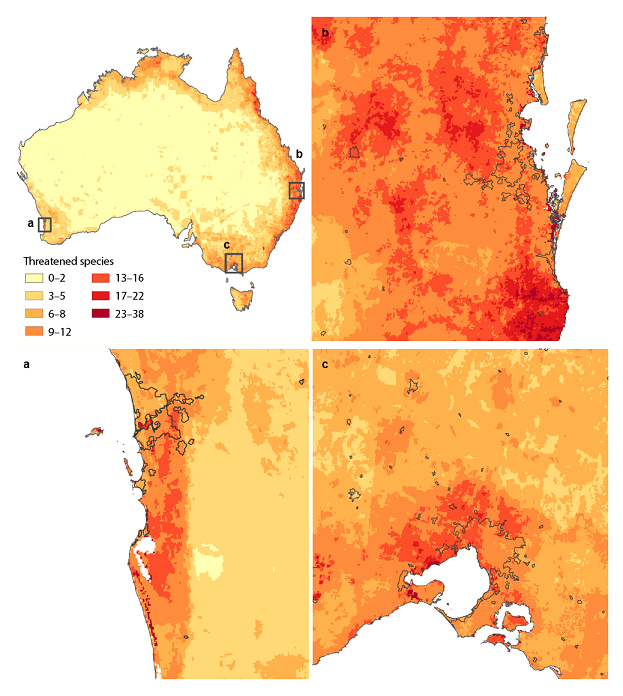
Cities are often located in areas with high biodiversity, and the process of urbanisation itself is likely to have led to many species that formerly occurred in these places now being threatened. In 2015, Ives et al. (2016) analysed the extent to which the distribution of 1643 species of national environmental significance under the EPBC Act overlapped with 99 Australian cities of more than 10,000 residents (Figure BIO5). They found that 25 per cent of listed plants and 46 per cent of listed animals had distributions that intersected with cities. The distributions of 8 threatened species (all plants) entirely overlapped with cities, whereas 51 (10 per cent) of the 503 threatened species found in cities had more than 30 per cent of their distribution in urban areas. The research showed that cities contain substantially more threatened species per unit area than non-urban areas.

Nature in cities delivers a remarkable range of benefits to human health and wellbeing. Individuals are more likely to live longer (Donovan et al. 2013), and have better general health and wellbeing (Dallimer et al. 2012) in a city with more trees.

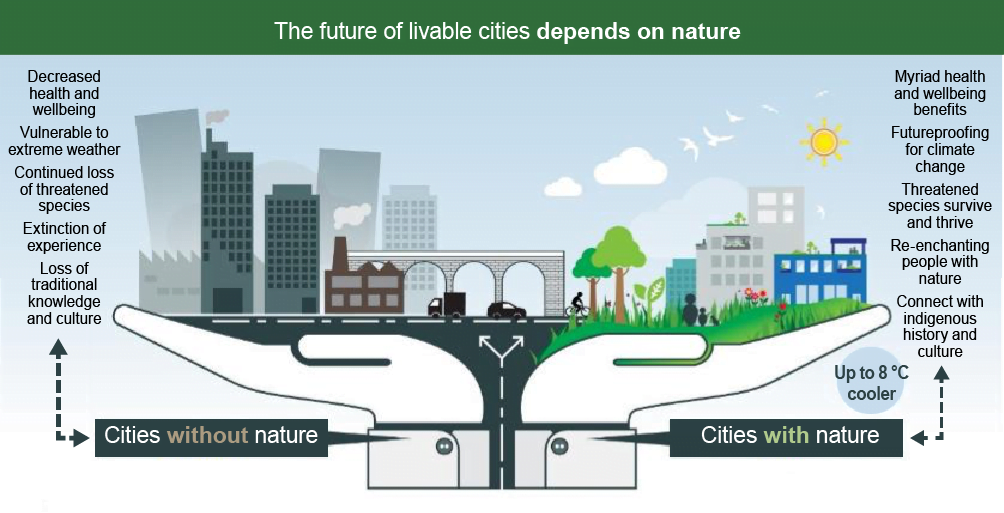
Urban greening can substantially improve the resilience of cities to climate change, potentially cooling cities by up to 8 °C in summer, alleviating the impacts of flooding and providing shelter from extreme weather events. Vegetation in cities can also play a significant role in mitigating climate change impacts by sequestering greenhouse gases, and reducing energy consumption for cooling and heating.

Cities host numerous threatened plant and animal species. In Australian cities, more than 3 times as many threatened species are found per unit area than in rural areas (Ives et al. 2016). Some species are found only in cities, whereas others rely on cities for key food and habitat resources. The future of many threatened species will depend on actions to accommodate their needs within city boundaries.

Creating opportunities in cities for everyday nature interactions provides an unparalleled opportunity to reconnect people with biodiversity, and expose urban residents to the myriad health and wellbeing benefits provided by nature. Furthermore, urban renaturing has the potential to connect urban residents with Indigenous history and culture, and create an avenue for preserving traditional knowledge and engaging urban Indigenous people in city planning processes.

The reasons for embracing nature in cities are compelling, but the pathways to achieve this vision are not always straightforward. An important first step is to reframe the way nature is considered in the planning process. Rather than considering nature as a constraint—a ‘problem’ to be dealt with—nature can be seen as an opportunity and a valued resource to be preserved and maximised at all stages of planning and design. It also requires a different conceptualisation of nature, where novelty is the norm and apparently scrappy bits of urban nature can have as much value as pristine nature reserves. The future of our cities may well depend on a new conceptualisation of urban landscapes, where nature can thrive and people can enjoy—every day—the remarkable range of benefits that nature can deliver (Figure BIO6).

soe2016 bio fig6 future of liveable cities depends on nature Biophilic Design Citygreen

Source: © Sarah Bekessy, GE Garrard & LM Mata, RMIT University, Melbourne; and RG Hobbs, University of Western Australia; all rights reserved

10 Principles for Better Urban Renewal for Public Spaces

Our impressions of a city are formed mainly by the quality of public spaces. If they are not pleasant and preserved, or if they transmit a sense of insecurity, we will seldom return. Good planning of these spaces should be the rule, not the exception. In the series “Public Spaces,” originally published in Portuguese by TheCityFix Brasil, we explore different aspects related to public spaces that determine our daily experience in cities.

Nothing lasts forever without conservation and preservation. With cities, it’s no different. Different interventions in cities can alter built-up areas or public spaces to address social issues, environment or health problems, or even reactivate the local economy. In this context, the practices of urban renewal, requalification, revitalization and rehabilitation can be used to not only renew a city but help proactively solve a wide range of problems.

First, we need to differentiate terms that are often used synonymously but do not have exactly the same meaning. Briefly, “revitalization” is about recovering space or an existing construction; “renewal” deals with replacing or rebuilding and changing use; “requalifying” adds new functions while improving the appearance, and “rehabilitation” is restoring but without changing function. Each of these processes, therefore, generates different results. All of them, however, are linked to the same idea: to transform urban spaces in order to rejuvenate them.

a family in white clothes rides electric scooters KGLN7W6 Biophilic Design Citygreen

Projects like these often arise from the need to solve economic, social or environmental issues, but are carried out in ways that make success difficult. They need community participation to be embraced but are often instead led by public-private partnerships that have few feedback mechanisms for community members to engage with. This is one of the most common criticisms of this type of intervention, in which large projects are conceived and constructed without any connection to the local reality.

New models of urban transformation should recognize that transformative change is no longer the responsibility of a single actor, organization, institution or sector. Change needs to be led by multi-stakeholder coalitions and movements, on the demand side as well as the supply side.

A report by the Australia-based consulting firm SGS Economics and Planning presents 10 principles for urban renewal that take the public interest into account, based on case studies in cities like London, Sydney, Melbourne, Hamburg and New York. According to the survey, much of the criticisms of urban renewal projects are a result of actions undertaken without the perspective and contribution of affected communities. Finding ways to include more participation could improve success rates. The report focuses mainly on renewal; however, the principles also apply to revitalization, requalification and rehabilitation:

1. Create “Shared Value”

Urban areas do not belong to a single group or individual but should offer value to many actors. All those who are part of the broader community as a whole – from workers and tourists, children and students, to the underserved and investors – should benefit from urban renewal. “Ultimately, the ‘communities’ for whom the value is created to share, should be those with long-term interests, not transient stakeholders with a primary focus on value extraction and repatriation,” write the authors.

2. Plan With Input From All

Delivering this shared value requires engaging with communities. Planners bringing an intervention into an existing space should share their vision and include people in the planning from day one, or risk it being rejected. Decision-making techniques such as cost-benefit analysis should be explained and employed to also promote “non-financial values,” helping communities feel a sense of ownership. The researchers also suggest the creation of a common platform where information about the process and the progress of the project can be shared transparently.

3. Build a Long-Term Vision

In any extensive process of urban renewal, the initial goals of the project may change over time. Even so, a long-term vision should be locked in and changes for the sake of short-terms gains resisted, with flexibility growing as the timeline extends further into the future. “A commitment to the public interest and shared value needs an inclusive approach, and future development stages should have the flexibility to be able to adapt to market and social changes,” write the authors.

Urban renewal plan shows the planting on trees in the streetscape

4. Agree on Non-Negotiables

Non-negotiation issues should be clearly understood by all stakeholders. These could include respecting existing lease terms, fixed quotas for affordable housing or protecting open spaces. The rights of renters and leaseholders should be guaranteed and stakeholders agree to a common set of design standards.

5. Agree on a Financial Profile

Studying how the space to be renovated is expected to yield from a financial perspective not only serves to set parameters for the project’s development options but is also critical to whether the public’s interests will be met. There are many options available to both provide returns on government investment in underserved areas but also safeguard communities from potential negative side effects, like rising taxes, and encourage a handoff to private developers in the future.

6. Establish Clear Development Goals

The planning process should develop and affirm clear objectives, not just desired outcomes. The best goals will be specific and measurable and anticipate the physical, economic and social results of the project.

7. Establish Options to Achieve Development Goals

There are often multiple options for achieving the same development goals and they should be compared to one another as well as to baseline scenarios of what might happen without any intervention. The process will create “a much clearer picture of marginal benefits and costs associated with any particular development option,” the report explains.

8. Incorporate a Sense of “Localness”

Local characteristics and peculiarities should be captured and incorporated into the new project. These details may come from local standards, services offered in the region, the environment, the climate or other socio-cultural specificities. Finding ways to assimilate a sense of the local into the project will help people identify with it, separate it from other similar projects and generate community acceptance.

9. Evaluate Options With the Goal of Maximizing Net Community Benefits

Cost-benefit analyses are often viewed with scepticism, but the report notes there are well-documented techniques that allow for the inclusion of things communities care about most, like open space, social capital and heritage. Finding ways to incorporate them into a cost-benefit analysis is important for avoiding the scenario where “financial considerations or otherwise vague community aims to end up dominating choices between options.”

Green tree streetscape of the urban renewal of Macquarie mall redevelopment in sydney
Macquarie Mall Redevelopment. Trees planted in Citygreen’s Stratavault Soil Vault System

10. Align the Procurement Model With the Planning Vision

Finally, the governance, implementation and contracting trajectories – how the project is actually carried out – should align with the unique vision laid out during the planning phase. Procurement targets should bespoke, rather than using “off-the-shelf” options. This may mean a greater role for the government as a developer in the early stages before handing off to private sector developers later.

“These principles are not locked in place but are guiding principles to ensure urban renewal benefits the widest community possible,” write the authors. “The renewal of strategically important urban sites must have the needs of communities, both social and commercial, at its core.”

At Citygreen Our vision is to create a sustainable world where Green Space is within reach of every person, every day. Urban renewal is core to helping achieve this vision.

Source: https://thecityfix.com/ Paula Tanscheit is the Communications Analyst for WRI Brasil Sustainable Cities.

What’s the Magic Number? 31.4 Million.

To advance Tree Equity and help slow climate change, we need to plant 31.4 million trees annually in U.S. urban areas.

By Ian Leahy, American Forests’ Vice President of Urban Forestry

1 0dk96YdJapkqE 1PYfC6A Biophilic Design Citygreen

An urban neighborhood in Providence, Rhode Island with a tree canopy of just 9%. Photo Credit: Eben Dente / American Forests

Source: https://americanforests.medium.com/

The Problems Urban Street Tree Face

Street trees planted on the waterfront in Sydney with stratavault soil cells

By: Sylvia McNeill, ISA Board-Certified Master Arborist RM-7117B © 2021 McNeill’s Tree Service

Urban street trees have a tough life.  Before I start on what could well end up being a rant, let me state: there are no trees “native” to the built environment.

When discussing the built environment, we are referring to anything and everything created by people.  It is contrived and manipulated.  The complete antithesis to where trees naturally grow.  And yet we want, and indeed need, them in our proximity.  If you doubt that, simply go someplace where there are no trees or plants whatsoever and then transport yourself to a place with them.  If you prefer the area without, believe me, you are in the minority.

Our cities are “built environments”.  To our credit, we keep trying to incorporate trees and plants within these areas to provide some kind of respite from the harsh concrete climate.  Are we successful?  According to some studies, not so much, suggesting the typical street tree mean life expectancy is 19-28 years.  However, it is further suggested the tree population half-life is 13-20 years, meaning for every 100 trees planted, only half of those will make it to 13-20 years.  (Roman 2014)

With all our modern technology and innovations, we are having a hard time achieving longevity in our street trees within urban areas compared to cities of the past.   Here in our area of Montana, some of our cities have street trees that are over 80 years old, some even older.  But as they decline and have to be removed, their replacements are having a hard time establishing and surviving.  So, what gives?

Modern cities are far different from cities of the past.  In the past, streets tended to be wider and unpaved.  Rainfall would be absorbed by the entire street area and any tree planted near that street would likely be able to access that water.

Common Reason Trees Struggle in Urban Environments

Problem Description
Lack of Soil Space Insufficient space for root expansion due to limited soil volume in urban environments.
Soil Compaction Soil in urban areas is often compacted, restricting water and nutrient absorption to the tree roots.
Root Damage Tree roots can be damaged during construction, heavy construction, pedestrian traffic, impacting stability and health.
Pollution Urban pollution, including air and soil pollutants, can harm street trees.
Watering Issues Overwatering or underwatering can lead to root rot or drought stress. A poor management plan and lack of adequate soil is often the reason trees fail.
Disease and Pests Due to street trees having less then ideal growing conditions, in urban areas trees are susceptible to diseases and pests that can weaken or kill them.
Mechanical Damage Physical damage from vehicles, pedestrians, or vandalism can harm street trees.
Poor Pruning Practices Incorrect pruning can lead to structural issues and reduced health.
Inadequate Drainage Poor drainage can result in waterlogged soil, suffocating tree roots.
Infrastructure Conflicts Trees may face conflicts with underground utilities, leading to root damage or tree removal.
Competition with Other Plants Planting trees too closely to other vegetation can lead to competition for resources.
Root Girdling Circling or girdling roots can constrict the trunk and affect stability and also lead to death due to root strangulation.
Climatic Stress Extreme weather conditions, like drought or heavy rain, can stress street trees.
Soil Contamination Contaminated soil can harm tree roots and affect overall health.
Tree Vandalism Deliberate damage, like graffiti or cutting branches, can harm street trees.
Lack of Maintenance Neglecting regular maintenance, like pruning and soil aeration, can lead to tree problems.


Streets now are paved where stormwater drains may be designed to bypass roots.  One of the many ecosystem benefits touted for trees is their ability to mitigate stormwater runoff…if it is channelled away from their roots, how are they to perform this job?

There are often paved sidewalks on one side of a tree with the parking area and adjacent street on the other side, again all paved.  These areas between the sidewalk and street often referred to as boulevards, may be very narrow or very wide.  Trees fortunate enough to be planted in wide boulevards have a much better chance of survival.  The caveat here is “if the quality of soil is sufficient to their needs”.

Sunburst honeylocust 2015 2016 04 12 16 09 13 UTC 2 Biophilic Design Citygreen

A lovely Gleditsia triacanthos ‘Sunburst’ – Sunburst honeylocust planted in a wide boulevard

In situations where trees are planted between a and a carpark. Solutions such as Stratavault soil cells are ideal in ensuring trees get large enough space for their tree roots to grow effectively and avoid damaging nearly infrastructure.

broken planting bed details Biophilic Design Citygreen

Infographic on how stratavault grows and protects street trees

The quality of soil in boulevards can vary from not bad to really awful.  With the construction of surrounding infrastructure and housing, all manners of debris may be buried in this area.  This may include concrete, building debris, contaminants – basically, anything that needed disposed of during construction could have been tossed here.  It may be rocky, it may be silty.  It may be seriously compacted, which restricts root growth and water drainage.

Related: How To Avoid Tree Roots From Drowning

Trees planted in the narrower boulevards are subject to conflicts with the sidewalk and streets as their roots grow.  As sidewalks require repair, roots are often cut to the detriment of water uptake or even stability of the tree itself.

100 2101 Biophilic Design Citygreen

Roots were severely cut back to enable sidewalk repair. Tree declined to a point where removal was mandated.

Tree Protection

Sometimes trees are completely surrounded by concrete or grates may be used to distance the trunk from the concrete. Unfortunately, if the grates aren’t maintained, they can also damage the tree.

Related: Tree Grates & Cities: What To Know

tough life blog 4 Biophilic Design Citygreen

Photo on the left example of poor tree grate maintenance. Citygreen’s Duraplate tree grate (on the right) incorporates specifically designed features for easy maintenance.

Another challenge experienced by city street trees is the pruning required to keep them above vehicle and pedestrian traffic. Merchants do not like their signage blocked and it is important to keep trees from blocking clear view triangles on street corners to ensure public safety.

Please remember, the trees did not plant themselves.  Very few are volunteers in these areas.  It is up to the people who plant them to select a species that is hardy enough to have a reasonable chance of survival in the site selected, that the site is actually suitable for a tree at all (some sites simply should not be planted), to ensure the tree has the potential structure to minimize pruning needs (which is a factor not only in the health of the tree but the expense for management), to ensure planting is done correctly and that aftercare is prearranged and committed.  These last two conditions are the most common reasons why trees do not survive the establishment period for any area, let alone for the challenges faced by street tree selections.

Additional challenges include damage by vehicles, vandalism, and extreme weather conditions enhanced by the infrastructure around them.  I often think trees survive in spite of us, not because of us.

tough life blog Biophilic Design Citygreen

These photos show the opposite sides of the same tree taken on the same day.


We need to work on being better stewards because we need trees.  There is no need to quantify “ecosystem benefits”.  All you have to do is remember without plants, we (humans) would not exist.

References: Roman, Lara A.  (2014) How Many Trees Are Enough?  Tree Death and the Urban Canopy.  Scenario 04:  Building the Urban Forest

Load More...

“Great customer service, quick response times and a very in depth QA system with constant support.”

- Laura Wiesenekker, Project Engineer, Densford Civil -

“Citygreen is a very professional  business, and I found everything was great in terms of deliveries, product supply and information. It was all forthcoming and helped us to complete the project.”

- Keith Burns, Architect/Designer, Keith Burns Architect -

“Citygreen offered training and invaluable technical assistance during the works.”

- James Callan, Estimating Manager, Complex Co Pty Ltd -

“Our experience, in working with a Citygreen Design Studio was second to none. We found responses from the design studio to be very timely, and technically thorough. We went backwards and forwards a number of times, looking at different iterations of the design and, nothing was too much trouble to examine and explore different possibilities. I would highly recommend the Citygreen Design Studio to any future client considering using your services.”

- Sandra Smith, Principal Landscape Architect, City Of Monash -

“We are big on compliance on all projects, and the fact that their SmartCertify cloud platform covers all bases, and supports their 20 year warranties, is critical – especially that these pits are being installed under roadways and footpaths.”

- Johny Purkaystha, Civil Program Engineer, Central Coast Council -

"I reviewed all the previous projects that we have installed in the past couple years using your product and I can happily report back that we have 0% mortality in the soil cells, which is incredible!"

- Brendan Wilton, CEO, Trim Landscaping, Bedford, Canada -