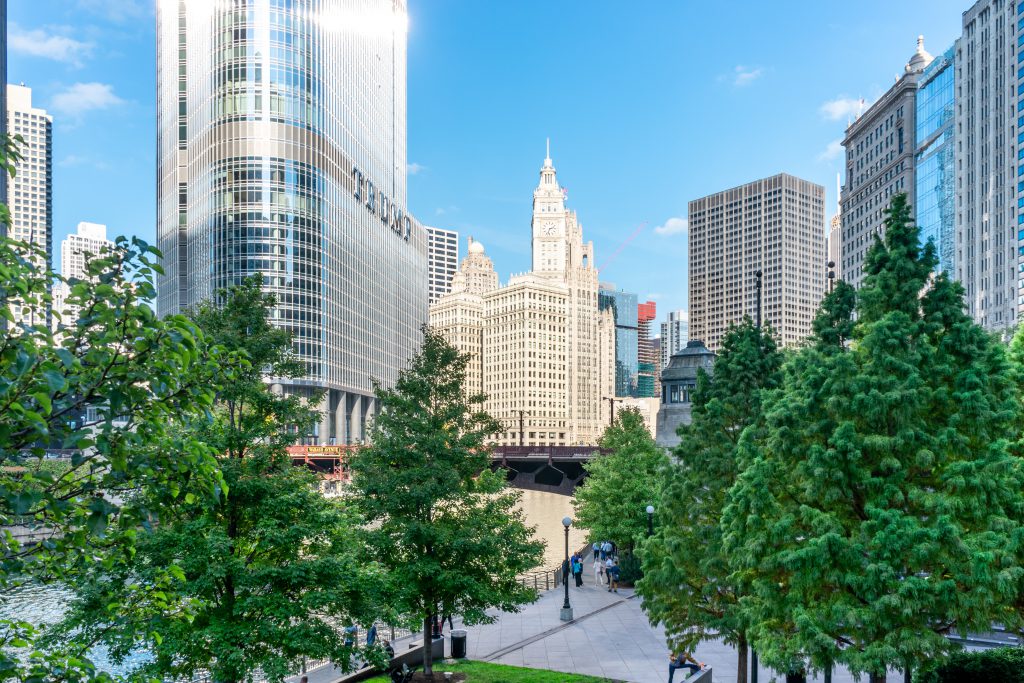
‘Shade-amenity’ & ‘green’ canopy, a critical element of any urban centre in Queensland, is afforded priority within The Mill, ensuring healthy, thriving canopy trees, now and for future generations.
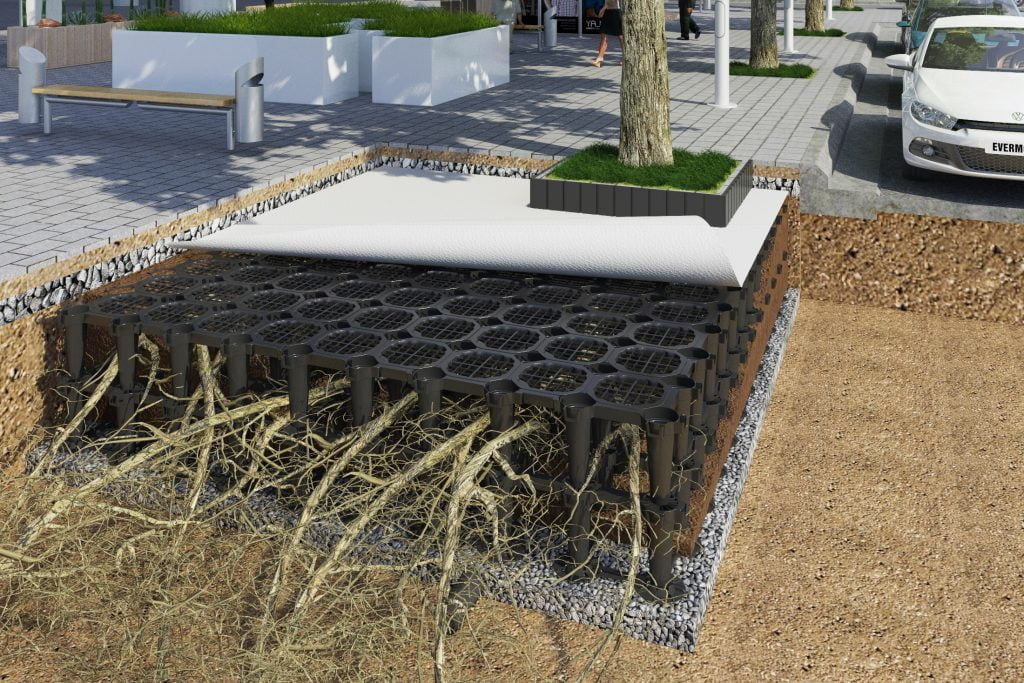
University of the Sunshine Coast has been enabled by providing optimum growing conditions for trees - provision of 1.2 km of continuous soil trenches (utilizing modular soil cells - Citygreen's Stratavault) and 1.2 km of continuous planting beds. Soil cells are also incorporated within street tree bioretention pits.
The competing demands of ‘above-ground’ amenity versus ‘below-ground’ infrastructure were ever present throughout the design process, and more so due to the proliferation of services in this primary urban centre, which included smart city and region-wide infrastructure. A collaborative & iterative process, in particular with the principal consultant & civil engineer, Advisian, enabled the collective requirements for ‘amenity’ and ‘servicing’ to be met.
The key to delivering this outcome was early-engagement/agreement about the importance of creating 'amenity value', and construction budgets to achieve the same.
As the first stage of the new development, it was imperative that the design set the benchmark while being flexible in its function to provide for new users, a growing regional community and evolving values and technologies.
Stage 1 is part of the broader 460 hectare Priority Development Area, encompassing the former paper mill, suburbs of Petrie, Kallangur and Lawnton, and anchored by Moreton Bay region’s first university campus - University of Sunshine Coast. Other expected uses include commercial, civic buildings, residential development, public parklands, sporting facilities and a substantial environmental zone.
Source of content: Written by Nader Ibrahim, Director at O2LA
Posted by Ben Gooden on Wed, Nov 11, 2020 @ 2:49 AM
Vehicles play an essential role in today’s cities and growing nations.
For most urban cities, vehicles are an indication of a progressive economy. Cars, trucks and buses provide access to businesses through people and product transport. However, the drawback is that these same city streets have become grey places where vehicles are prioritized over people in the way we design cities.
While busy roadways deliver unmistakable benefits, they don’t entirely enhance citizen welfare and overall human wellness within anurban landscape. Cars require significant space to drive and park – space that significantly reduces the opportunities for residents to walk freely, appreciate nature and enjoy outdoor activities. This is without even mentioning traffic, pollution and safety issues.
The revolutionary Woonerf design solves this problem by transforming trees found within urban environments into shared green spaces where pedestrians and vehicles can actually co-exist in an optimal balance.
Through it, you can improve the local community’s quality of living and heighten road safety in the city.
What is a “Woonerf”?
A Dutch term meaning “living street” or “shared space,” refers to a design concept aimed at creating a safer, more interactive, and pedestrian-friendly environment within urban areas.
In a woonerf, vehicles, pedestrians, and cyclists share the same space, with an emphasis on reducing vehicle traffic and creating a safer atmosphere by encouraging social interaction, enhancing walkability, and promoting a sense of community while prioritizing the well-being and safety of pedestrians and cyclists.
This street design modelled around shared space, low-speed limits and traffic calming was first implemented in the Netherlands and Belgium.
A Woonerf design places emphasis on the overall quality of life, rather than the speed of it. Traffic calming strategies such as street furniture, increased trees and plants, bollards, limited sight distance and narrow paths of travel are utilised to lessen car traffic, offering residents a greater sense of ease, safety and comfort when walking city streets.
By using Woonerf techniques, urban streets are transformed to a social space where pedestrians are encouraged to make use of the entire roadway, move freely from one point to another and participate in recreational activities and increase patronage to businesses.
A Woonerf-designed street creates no division between vehicles and people. Hence, it is referred to as a “shared space” that is open for cars but is also catered to giving citizens a pedestrian-friendly and welcoming environment.
One characteristic feature of Woonerf is landscaping. Through community gardens, plant boxes and thriving city trees, people have a better city experience due to the calming and inviting natural elements that create a more pleasant ambiance, encourage pedestrian interaction, and prioritize the well-being of individuals over vehicular traffic when travelling through their local city streets.
Let’s demonstrate this with a practical example.
A Real Woonerf case-study: John Hirsch Place in Winnipeg, Canada
Before the City of Winnipeg decided to revamp John Hirsch Place, it was simply a one-way road with sidewalks on either side and parking spaces along the edge of the street.
With the path hindered by garbage bins, fences and trees, John Hirsch Place was not very welcoming and accessible for citizens. The vehicle-centric road also didn’t feature pedestrian amenities that encouraged residents to the street.
Fortunately, the City of Winnipeg’s Transportation Master Plan addressed these concerns by enhancing the downtown’s street to become safer, greener and most importantly, accessible and equitable to all road users – including pedestrians.
The Woonerf model was then implemented at John Hirsch Place to reduce traffic on the residential road, increase road safety and position the idea of the street as a public open space where people could move freely from connected pathways, parking lots and buildings.
Today, the new roadway hosts a new layout without the traditional curb, sidewalk and boulevard set-up, but instead, with installed bollards to guide car traffic and give residents enough protection against vehicles – allowing them to co-exist safely in the city street. Another part of the Woonerf design you can see at John Hirsch Place is the significant lighting that encourages pedestrian activity even in the evening.
How to Plant Trees in a Woonerf Designed Street
For the landscaping aspect of this Woonerf approach, Citygreen’s soil vault system is the ideal choice. It facilitates the healthy growth of trees and shrubs at John Hirsch Place by offering a structural strength matrix as a sub-base for the roadway.
Citygreen’s Stratavault soil vault system helps trees grow in densely built urban areas, similar to a Woonerf approach. It achieves this by providing a large volume of soil to the trees through a structural matrix installed beneath the pavement or road, allowing their roots to thrive when compared to traditional tree planting methods.
The key advantage of a soil vault system is its ability to support the weight of the pavement or road above, while also ensuring ample space for the tree roots to grow.
Moreover, the soil vault system can effectively integrate stormwater management principles into its design. The key way the stratavault soil vault system can improve stormwater management principles include:
Stormwater Filtration: As stormwater filtrates into the vault, pollutants and sediments get filtered out by the tree roots and high quality soil. This process improves the water quality of the excess stormwater and reduces the negative impact of runoff on downstream ecosystems.
Peak Flow Reduction: During intense rain events, the peak flow of stormwater can put a strain on existing stormwater infrastructure and exacerbate flooding issues. Soil vaults help mitigate this problem by attenuating the flow rate. By slowing down the release of water, the system eases the burden on downstream drainage systems and helps prevent erosion.
The Role of Citygreen’s Soil Vault Solution in a Woonerf Design
The City of Winnipeg decided to utilise Citygreen’s soil cell solution due to the space constraints found within this particular urban environment. This soil retention system enables trees and shrubs in this Woonerf case study to have sufficient soil volume for their growth and development while maximising the available right-of-way for all road users.
The system also provides a stormwater management advantage for John Hirsch Place. Since Downtown Winnipeg is composed of old, combined sewer systems that already required maintenance, repair or replacement, the soil cell system was used to reduce the flow and loading within the aging combined sewer network.
The application of Citygreen’s soil vault solution for the Woonerf model utilised at John Hirsch Place has already supported the growth of approximately 600 perennials and 20 new and mature trees. This has led to an improved public right of way that has also cultivated a greener shared urban space for both vehicles and residents.
The Woonerf approach to city planning is blazing new trails in improving the quality of life in residential streets all across the world.
Citygreen, with its cutting-edge technology and urban landscape solutions, can help take the Woonerf model to a new level. Through innovative soil vault systems, improving pedestrian environments, addressing concerns about vehicle movements and enhancing streetscape can be achieved with a greener and more cost-effective way.
Are you a local government council, public space architect, town planner or property developer looking to transform your local community into a vibrant green space?
This can be a great initiative to make a real difference for the health of your suburb, the local citizens and the environment. However, these projects are often costly too.
Fortunately, governments often have certain financial grants available for sustainability projects like these.
So how do you apply for a government grant successfully?
What is a government grant?
A government grant is an application for the financial assistance given by the federal, state or local government to support a particular project.
There are grants available all over the world that can help finance your plan to build sustainable spaces. However, grants are funded by tax dollars, which means strict compliances and measures must be followed to make sure that the money will benefit the whole community.
This needs to be proven for your project to even be considered.
Being approved for a government grant is a huge deal because it means that your project will be contributing to the community.
However, there are a lot of requirements and paperwork that have to be prepared and submitted in order to apply. This process can be time-consuming and quite confusing at times, due to the requirements.
How can Citygreen help you apply for a government grant?
With strict standards on product choice, support networks, procedures, costings and proposals, attaining a grant from the government can be quite a difficult task.
But we’re here to help you.
At Citygreen, we have a team of government grant application specialists who can assist you with all the paperwork and processes, from compliance to analysis, costings and more. The added benefit is that working with a known brand like Citygreen means your project will include world-renowned products with high-quality sustainability ratings.
So, you don’t just have our assistance and expertise to help you apply for the government grant, but the products and proven green systems that we include will provide a highly compelling item to your submission.
Government grand case study: working with Citygreen
Here’s an example of a client that we helped with our grant application assistance.
Both our service as well as our products successfully secured a grant from the government. This project wouldn’t have proceeded without our assistance, and we’re so proud that we were able to help facilitate such a valuable project for the good of the local community.
Citygreen is passionate about helping you achieve your goals of protecting our planet with sustainable solutions. For quality government grant application services with state-of-the-art products, contact us today!
Posted by Ben Gooden on Mon, Oct 26, 2020 @ 12:16 AM
California is known for many things–Disneyland, Hollywood, its beaches and more. But now more than ever, with the frequency of wildfires in the state, it seems that people cannot avoid mentioning the fires when the topic of California comes up. They’ve gotten so frequent that Californians residents are no longer surprised when a fire sweeps through. Can something be done?
California’s yearly fire season
California’s fire season has gotten worse over the years –lasting longer and becoming more destructive. Compared to the prior decades, the fire-affected zone has doubled every year since the year 2000. Unfortunately, it’s believed that this will only worsen over time. After more than a century of suppressing these fires, Californian forests are now overgrown, and this poses even more of a danger. Some parts of the land hold three to five times as many trees compared to previous years. Now that they are crowded into a small space, trees have also grown weak as they compete for water, nutrients and sunlight. On top of that, shrubs and small plants tend to multiply in wet weather, increasing the risk of kindling once dried.
How can this be prevented?
You may think that there is no solution -but some smart tactics can actually be implemented to help limit these forest fires. These tactics aim to restore the forests back to healthy, historic conditions where the trees were widely spaced apart from each other with diverse native grasses and wildflowers growing below. These techniques are often referred to as climate-smart or holistic forest restoration. The most critical thing to do now is to bring back vitality to the forests. Thinning overgrown trees and leaving the largest and most flame-resistant trees can help the land survive the unpredictable climate. With empty spaces left behind by strong flames, new seedlings can be hand-planted at more of a distance apart to prevent the widespread of fire in the future.
It’s only a matter of time before these vast forests become natural casualties to the dreaded California wildfires-so it is important that we do whatever we can to help counteract these catastrophes. At Citygreen, our vision revolves around turning the world into an effective green space where all mankind can sustainably benefit from its natural resources. That’s why we align our products and solutions towards building and nurturing a healthy environment.
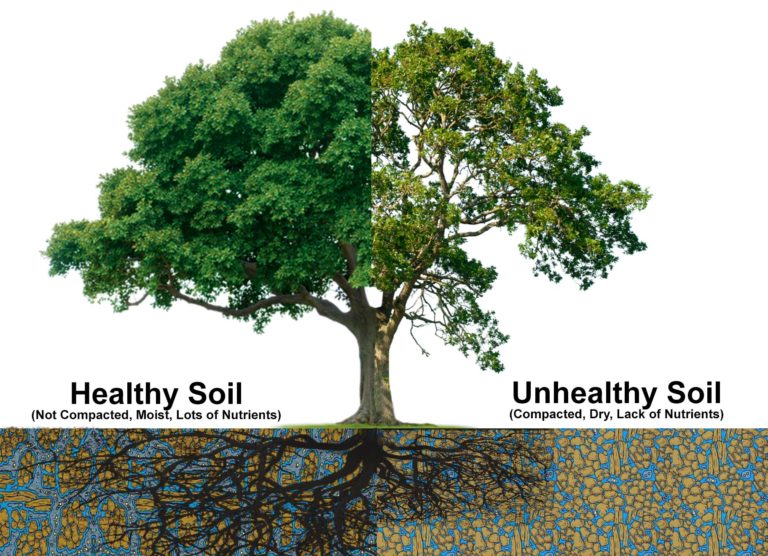
Soil is composed mainly of elements like water, minerals, nutrients and gases.
Different types of soil vary according to texture, colour, depth, acidity, fertility and ability to hold water. Because each tree species has different needs, it’s crucial to know what kind of soil they require to grow – if you want the best results.
To help familiarise yourself with the varieties of soil, here are the most common types of soils you need to remember:
Chalky – a stony type of soil that can be found on top of limestone or bedrock
Clay – a tightly packed soil that is often lumpy and sticky when wet
Sandy – dry and loose soil base that has a rough texture
Silt – smooth, slippery kind of soil that is composed of fine particles
Peaty – contains a great amount of organic matter due to its acidic nature
Loamy – the best soil for planting, as it’s full of nutrients and can hold water well
Why is Loamy Soil the Best?
Loamy soil stands out as an optimal choice for trees due to its unique blend of qualities that foster robust growth. Its balanced composition—a blend of sand, silt, and clay—provides an uncompacted environment for tree roots. Loamy soil offers excellent drainage, preventing waterlogging that can drown roots, while retaining enough moisture to sustain trees during dry spells. Moreover, loamy soil is rich in essential nutrients, supporting healthy tree development by efficiently absorbing and storing vital minerals. Its texture facilitates superior aeration, preventing compaction and enabling roots to spread easily, reducing the amount of energy the tree needs to use to push new root growth through the soil ensuring strong anchorage and encouraging healthy root systems. The versatility of loamy soil accommodates a wide variety of tree species, making it an excellent choice for nurturing flourishing trees.
However, while loamy soil is generally advantageous for tree growth, different tree species may have specific soil preferences. Factors like climate conditions, sunlight exposure, and adequate care significantly impact a tree’s health and growth.
At Citygreen we do on-site soil analysis for any new plantings and can offer you soil specifically designed for the tree and site location. This ensures that the tree is planted in the best possible circumstances to kickstart canopy growth.
Why is Soil Quality Important for Tree Health?
The soil you use can either nurture or restrain your trees’ growth because soil performs a lot of essential functions. Here are the five reasons why soil is important for trees:
Soil provides a foundation for tree growth.
Soil serves as the anchor that holds trees firmly in place. It provides structural stability, preventing them from toppling over in adverse weather conditions. The composition and texture of the soil determine how well it can support a tree’s weight and ensure it remains upright throughout its life.
Soil stores the necessary amount of water for trees.
Soil acts as a reservoir for water, which is crucial for a tree’s survival and growth. It stores rainwater and moisture, making it available to tree roots during dry periods. This stored water ensures that trees can continue photosynthesis and nutrient uptake even when external water sources are scarce.
Soil Hosts Biodiversity.
Soil is a vibrant ecosystem teeming with life. It provides habitat for various organisms, from earthworms to beneficial microorganisms. This biodiversity is essential for soil health and indirectly benefits trees by enhancing nutrient cycling, improving soil structure, and promoting overall soil vitality.
Soil supports the trees’ roots in accessing nutrients and minerals.
The root system of a tree relies on the soil to access essential nutrients and minerals. These nutrients are found in the soil in various forms, and the tree’s roots play a vital role in absorbing and transporting them to different parts of the tree. Adequate soil composition is crucial to ensure that trees receive the nutrients they need to grow and thrive.
Soil filters out the pollutants that can harm trees.
Soil serves as a natural filter, removing harmful pollutants from water before it reaches a tree’s root system. Pollutants, such as heavy metals or chemicals, can be detrimental to trees if they enter their vascular system. The soil acts as a protective barrier, purifying water and ensuring that only clean, nutrient-rich water is available to the tree’s roots.
In urban locations where healthy soil is not abundant or tightly compacted to ensure stability for urban infrastructure, it’s important to ensure that trees are planted with the appropriate soil structure to compensate – often called the “architecture of the soil.”
Having the right soil architecture guarantees that there is proper arrangement of soil particles (including silt, sand and clay that aggregate together). It also involves measuring the correct pore spaces between each tree, which enables their roots to propagate without causing any structural pavement damage.
Healthy, Vibrant, Human-centered Streetscape in the heart of the Glen Waverley Activity Centre
In Glen Waverley redeveloping a major area in an already established activity centre presented various challenges, including trying to create canopy cover and softening the streetscape while working with a myriad of existing service structures.
The O’Sullivan Road Streetscape Project aims to create a pedestrian focused central street as part of a larger partnership project between the City of Monash and a number of developers involved with constructing major new retail and residential developments.
As James Anderson, Project Manager and Director for Normark Landscapes Pty Ltd explains, this was no small consideration.
“There was every service known to man running through there. There was high voltage, stormwater, sewer, fire service, water, literally everything.”
With so many services in place, adding a significant number of trees required a solution that eliminated risks involved with tree roots interfering with services.
Creating corridors for root development with Stratavault
Chamantha Rajapaksa, Project Manager for Bitu-mill Pty Ltd outlines some of the issues they’ve seen in the past where this wasn’t managed effectively, and how Stratavault eliminated that potential.
“It’s actually a good system, because you can give the tree roots a corridor to grow in a way that you want it to go. We do road construction all the time. We’ve had issues where tree roots have wrapped completely around a gas main or a water main, so that if somebody would pull up the tree it would damage utilities.”
With 11 trees being added, a significant part of O’Sullivan Road had to be excavated and instead of using individual tree pits, the decision was made to use the Stratavault product to create a series of linear trenches.
Sandra Smith from the City of Monash explained the decision further, saying
“The reason we chose to go this way is we wanted to maximize the available soil volume for the trees, which were reasonably closely spaced, as opposed to the individual pits for efficiency of construction to give at least a linear corridor for the root development within the constraints of existing services.”
The Stratavault also provided additional benefits, allowing Bitu-mill to just box around the services and create the trenches. They combined the vault system with permeable paving around the trees, helping water the trees effectively with natural rainfall.
With many different stakeholders, including the City of Monash, developers, builders, architects and more, Citygreen were able to simplify the installation and assurance process for the patented Stratavault product.
The assembly was easier than expected
Normark Project Manager James Anderson has used it before and will again, saying
“There was flexibility there. It was easy to install. We enjoyed installing it. I’ve already installed it before. I’ll obviously install it again, so big tick from us.”
While Bitu-Mill were using it for the first time. To make it easy, they included a Citygreen training video as part of their induction process to show how it’s done. And easy it was, with Chamantha highlighting it “was just like assembling Lego, which is very, very, very easy to install.”
The ease of use and the results have the City of Monash and Bitu-mill determined to include Stratavault in future stages of O’Sullivan Road.
In the middle of winter, the trees continue to thrive. Talking to Citygreen about the project recently, Chamantha Rajapaksa, Project Manager for Bitu-mill Pty Ltd outlined just how successful the tree solution has been saying;
“The trees, they are thriving. It’s the best tree growth I’ve seen in the City of Monash… and the Council has expressed extreme satisfaction with how they trees are growing… they want to continue the tree vauly system for the rest of O’Sullivan Road from what I hear.”
Government highly supportive of sustainable outcomes
The O’Sullivan Streetscape Project was an opportunity for the City of Monash to put Stratavault to the test, but there were a lot of considerations before including it in the project to begin with.
Sandra Smith was keen to get the various developers on board with using the Stratavault system having seen the benefits in other projects, saying
“We’ve had firsthand experience of the success of the product system in delivering a more reliable establishment of the trees, drought resistance, and improved long term health and performance of the tree canopy in an urbanised environment. We knew thissystem should be continued as thebusiness as usual approach for O’Sullivan Road.”
Stratavault being made entirely of 100% recycled plastics there is a broader benefit to its inclusion
Part of the attraction was about the desire of Local Government to support local businesses and sustainable outcomes and with the Stratavault being made entirely of 100% recycled plastics there is a broader benefit to its inclusion. Sandra sees Councils as key players that can really support local industry and sustainable initiatives through their procurement decisions.
There was some consideration of finding a cheaper alternative but looking at the full lifecycle cost made a big difference. By using the linear trenches of Stratavaults combined with permeable pavers, Council expects the benefits to be long lasting, alleviating long term maintenance requirements.
“We don’t expect to have to come back and install replacements. We anticipate that we will get a very successful tree canopy that will provide welcome shade, offsetting the urban heat island effect, particularly within the context of the high-density development that’s being created within the activity centre. The canopy will also create a softening, greening and human scale in an otherwise hard urban setting. Deciduous trees were selected to allow for winter sun and summer shade, giving that sense of seasonal change, which I think is something that’s quite special to life in Melbourne.”
Citygreen and Stratavault, making it easier to transform grey spaces into green
One of the key things that helped this project get the best possible outcomes for their trees was the highly responsive, incredibly determined team at Citygreen. The design studio gave Council the ability to work through a range of solutions to find the right balance between budgetary needs and long-term sustainability.
Sandra called out the difference it made, saying
“Our experience, in working with a Citygreen Design Studio was second to none. We found responses from the design studio to be very timely, and technically thorough. We went backwards and forwards a number of times, looking at different iterations of the design and,nothing was too much trouble to examine and explore different possibilities. I would highly recommend the Citygreen Design Studio to any future client considering using your services.”
A 100% recycled solution, a design team that works closely with all key stakeholders to get the best outcomes, and an industry leading product which is incredibly easy to install all contributing to creating a healthy, vibrant, human-centred streetscape in the middle of a thriving urban activity centre.
Posted by Ben Gooden on Sun, Aug 02, 2020 @ 11:38 PM
While people are supposed to drink about eight glasses of water a day, a tree in Ohio with a 10’ canopy can require as much as 100 gallons a day!
There are a couple of crucial considerations you need to take when it comes to water your trees. Insufficient water can lead to poor outcomes, including killing the tree. Too much water without sufficient aeration and drainage can have the same result.
A quick, easy way to test is to use a screwdriver to get about 2 – 3 inches down into the soil. If that soil feels moist to the touch, it’s exactly how it should be. If it’s dry, then it’s time to water.
Watering a young tree (<25 years old) is a matter of watering the roots around the trunk. You don’t want to flood the tree trunk, nor do you want to water outside the root ball.
Older trees (>25 years or a trunk over 12” in diameter) require deep watering completed occasionally. You’re looking at about 10 gallons per 1” of trunk diameter per week during dry conditions.
So how do you get that water to your trees, without standing around with a hose all day?
There is a range of solutions, from slow-release water bags, bubbler hoses, and overhead irrigation systems, through to a 5-gallon bucket with holes drilled in the base.
By creating space for adequate aeration with the Stratavault, you can limit excessive soil compression, and the perforated pipes provide airflow and enable water to be piped directly into the roots.
Combining systems like these in urban areas with permeable pavements, and connecting roof water systems to tree pits helps harvest stormwater, better managing both tree watering needs and stormwater management. To find out more about watering and aerating tree pits to improve growth outcomes, head to https://citygreen.com/product-category/tree-pit-irrigation-and-aeration/
Posted by Ben Gooden on Thu, Jul 30, 2020 @ 3:29 AM
Lockdown. A time when many of us became all too familiar with our own homes. With restrictions easing in many parts of the world, many cities are re-evaluating what public space looks like.
One measure gaining traction with many businesses and local councils is the encouragement of alfresco dining and drinking. The Clematis Streetscape Project, currently in its final stage, saw one of the most iconic streets in West Palm Beach undergo significant changes, creating a more welcoming, comfortable outdoor experience.
(You can find out more about that project, which Citygreen were proud to be involved with here – Clematis Street case study)
Liverpool is another city looking to create green spaces which spread people out and improve social distancing, without resorting to bright yellow and orange ‘caution’ tape.
Their outdoor dining initiative is designed to give the city’s restaurants a much-needed boost and involves pedestrianizing several streets completely and introducing “parklets”.
According to design consultancy Meristem, parklets are a way of converting parking spaces into something far more welcoming than the typical park bench, with seating, plants, green walls, and shade trees. Where before, parking availability was a primary concern, the focus is now on creating spaces that welcome people.
Meristem director Habib Khan said, “research shows that the majority of money spent in businesses on High Streets and in cities is not from drivers anymore.” Parklets and similar spaces are a critical component of creating safe, inviting outdoor dining environments and helping businesses emerge from their coronavirus lockdown.
The use of plants and trees to provide shade and tranquillity in busy city hubs is vital, and Liverpool has even included transparent screens in parklet designs so that people can be together, but be assured in their own bubble.
And while 2016 saw office spaces everywhere looking at including green walls in their building, bringing the outdoors inside, 2020 might see the world flip the switch on that concept. With more cities looking to increase alfresco dining options, green walls and parklets might see more of our indoors showing up outside.
Citygreen is supportive of any idea that transforms grey spaces into green and helps cities and industries thrive in a post lockdown world. To find out more about our Green Wall solutions, head to https://citygreen.com/product-category/green-wall-systems/
“Great customer service, quick response times and a very in depth QA system with constant support.”
- Laura Wiesenekker, Project Engineer, Densford Civil -
“Citygreen is a very professional business, and I found everything was great in terms of deliveries, product supply and information. It was all forthcoming and helped us to complete the project.”
- Keith Burns, Architect/Designer, Keith Burns Architect -
“Citygreen offered training and invaluable technical assistance during the works.”
- James Callan, Estimating Manager, Complex Co Pty Ltd -
“Our experience, in working with a Citygreen Design Studio was second to none. We found responses from the design studio to be very timely, and technically thorough. We went backwards and forwards a number of times, looking at different iterations of the design and, nothing was too much trouble to examine and explore different possibilities. I would highly recommend the Citygreen Design Studio to any future client considering using your services.”
- Sandra Smith, Principal Landscape Architect, City Of Monash -
“We are big on compliance on all projects, and the fact that their SmartCertify cloud platform covers all bases, and supports their 20 year warranties, is critical – especially that these pits are being installed under roadways and footpaths.”
- Johny Purkaystha, Civil Program Engineer, Central Coast Council -
"I reviewed all the previous projects that we have installed in the past couple years using your product and I can happily report back that we have 0% mortality in the soil cells, which is incredible!"
- Brendan Wilton, CEO, Trim Landscaping, Bedford, Canada -