How Citygreen’s Stratavault™ system nurtured the growth of trees outside the Minneapolis Metro Transit Police Department

How Citygreen’s Stratavault™ system nurtured the healthy growth of trees outside the Minneapolis Metro Transit Police Department

The Minneapolis Metro Transit Police facility – 560 N 6th Avenue, Minneapolis – was awarded the Finance and Commerce Top Project of 2019.

This 30-month construction project consisted of a four-level addition and a partial renovation of the existing police facility. It also involved developing a welcoming plaza space surrounded by a planned tree canopy.

Donlar Construction, COEN+PARTNERS and Metro Transit all collaborated with Citygreen to enable the healthy growth of trees along the sidewalk and entrance of the police station. The Stratavault™ system was selected as the ideal solution to promote healthy tree root growth, breathing all new life to the once lacklustre location.

Here’s how.

case study Minneapolis Metro Transit Police Department Citygreen

Project Goals

The main objective of the Metro Transit Police Department’s tree planting project was to showcase a thriving canopy of trees that would provide aesthetic appeal, as well as shade, especially during the hotter months of summer.

COEN+PARTNERS, the project’s architect team, also placed a high priority on sustainability.

“One of the project’s goals was to be sustainable. We aimed to optimise the best tree planting practises like using porous paving and soil cells to ensure the trees would grow healthily despite the challenging environment,” said Britton Jones, Senior Associate, PLA.

Metro Transit Police Department also recognised that the urban canopy is a tangible asset with a propensity to deliver valuable ROI (Return On Investment) if correctly managed. As a result, the project also had a goal of creating a high ROI in the long run by planting more trees outside their facility.

case study4 Minneapolis Metro Transit Police Department Citygreen

Project Challenges

When it came to tree planning, Donlar Construction found the project challenging due to various site and location restrictions. To solve these, they utilised off-site staging, strict scheduling of site deliveries and the removal of contaminated soil.

Britton Jones of COEN+PARTNERS said, “we also recognised that the hardscape area outside the facility presented an additional challenge to overcome to guarantee the healthy growth of trees.”

With its innovative design, proven strength, sustainable material and lower installation cost, Citygreen’s Stratavault™ system was chosen as an ideal solution for this project.

case study6 Minneapolis Metro Transit Police Department Citygreen

Project Methodology

Citygreen’s Stratavault™ system was utilised to reduce impervious coverage, improve stormwater management and nurture the healthy growth of trees at the entrance of the facility.

Made from 100% polymers, the open matrix design of Stratavault™ provided a healthy architecture of the soil, allowing the tree roots to grow well and absorb essential nutrients. Stratavault™ was also installed with minimal effort and costs due to its modules that easily snap together. There were no messy zip ties, screws or ground spikes required to assemble the product on site.

Furthermore, the design of this system paved the way for the trees to obtain the right amount of irrigation. All rainwater is properly absorbed and redirected towards the trees to provide sufficient water. Stratavault™ also offers stormwater management advantages which, in an urban environment, may help reduce flood risks and lessen pollution carried to local bodies of water.

“With Citygreen’s Stratavault™ system, we saw diminished compaction and excellent soil conditions were maintained for growing trees outside the Metro Transit Police Department.”

Soilvault system compared to structural soil

Project Outcome

The use of Citygreen’s Stratavault™ system resulted in the fast growth of healthy Honey Locust trees around the facility. In fact, some of the trees even outperformed those planted at the same time on the grass verge (as shown in the picture above).

As reflected in the Top Project of 2019 award, the thriving trees outside the police station have contributed to making the overall addition and remodel project such a success. The thriving urban trees enhanced the visual outlook by making everything look more vibrant and refreshing.

In just a few years from now, the Metro Transit Police Department will have a thick, green canopy of healthy adult trees that will deliver environmental, health and economic benefits – all thanks to Citygreen’s Stratavault™ system.

At Citygreen, we offer a wide range of cutting-edge urban landscape products like the Stratavault™ system.

Speak to us today. Our team can discuss how we can enhance your urban space into a greener and more thriving place, just like the Metro Transit Police Department in Minneapolis.

case study3 Minneapolis Metro Transit Police Department Citygreen

case study2 Minneapolis Metro Transit Police Department Citygreen

Using Stratavault for Residential Property in Milwaukee, Wisconsin US

Greener landscape for a residential property in Milwaukee, Wisconsin US

Omni Ecosystems, a green infrastructure company, was approached by a client who wanted to beautify their residential property at Milwaukee in Wisconsin, by creating a more natural appearance.

“With a desire to be totally immersed in nature, our client requested their landscape to be as natural as possible,” said Nicole Davis, the Project Owner.

In striving to achieve a perfect balance with the modernisation of the property’s facilities, they opted to plant iconic trees. Not only would these trees add touches of organic green to the area, they would also deliver a range of health benefits to the local residents too.

Citygreen’s Stratavault™ system was selected as the ideal choice for this landscaping project to ensure the trees would successfully thrive, despite the limited room available for growth onsite.

Aring7 Minneapolis Metro Transit Police Department Citygreen

Project goals

As the residence was an open 2.5-acre site over a ravine and a bluff, the priority for this landscape project was in establishing a connection to nature.

The client wanted the home to be naturally beautiful, so Omni Ecosystems committed to transforming all residential grey spaces into a harmonious, greener environment.

“Our primary goal was to breathe life back into the site in a way that was reminiscent of its past. So, we aimed to incorporate Southern Wisconsin hardwood forest trees (maple, oak and birch) and prairie ecology (tall grasses and perennials) to the property,” added Nicole.

Project challenges

Taking into account the added need for vehicular driveway surfacing, Omni Ecosystems was up against the challenge of finding a way to position a stretch of birch trees in a central courtyard surrounded by the residence.

They also had to consider getting the landscape profile right, which involved integrating the spaces required for ducts of utilities without losing the soil volume needed for healthy trees.

To address these concerns, they decided to use Citygreen’s Stratavault™ system. With its innovative design, higher strength and lower installation cost, it was the ideal solution.

Nicole said, “We chose Citygreen’s Stratavault™ because it had a great potential to manage all of our challenges. It was also more cost-effective than other competitors.”

Aring2 Minneapolis Metro Transit Police Department Citygreen

Project methodology

The open matrix design of Citygreen’s Stratavault™ system was effective in nurturing the architecture of the soil. As a result, birch tree roots were able to naturally grow and thrive without causing damage to the surrounding paved surfaces of the residence.

“We needed maximum volume for uncompacted soil – fortunately, Citygreen was able to solve that problem. Its structural component occupied only 10% of the soil volume, so 90% of the total volume was still available for future tree root growth,” Nicole explained.

Characterised by its interconnected modules, Stratavault™ also facilitated the applied load weight from above ground to be shared and the lateral strength to be maximised.

“Radiant heat and black locust paver units were installed on top of the Stratavault™ system. These can be quite heavy. Nevertheless, the solution didn’t fail to meet our project’s structural integrity requirements.”

The increased apertures of Stratavault™ also ensured that larger conduits, service pipes and aeration systems were supported, paving the way for utility systems (such as drainage, water and electric) to be properly installed and function correctly.

Aside from addressing the project’s initial challenges, Stratavault™ also provided the trees with the perfect amount of irrigation. The system allowed rainwater to be properly absorbed and redirected for the healthy growth of the trees, following stormwater management best-practises.

“The combined system provided stormwater management on-site, which then protected the fragile ravine ecosystem below.”


Project outcome

Thanks to Citygreen’s Stratavault™, the Milwaukee residential property was beautifully decorated with healthy Whitespire birch and Marmo maple trees. Its owners now fully enjoy the natural aesthetic and atmosphere created by the trees, while experiencing all the different benefits they offer.

“The project involved planting over a year ago. To date, the trees are still thriving, and erosion has also diminished in the ravine.”

By adding colour to grey space, the growing trees have added to the vibrancy of the home’s surroundings. They also made the home more liveable and sustainable for its residents.

Nicole echoed, “Working with this technology, we were able to deliver uninterrupted mass volumes of good soil and prosperous landscape. This helped us achieve our ongoing goal of providing the best and healthiest ecosystems to our clients.”

At Citygreen, our wide range of cutting-edge urban landscape products like the Stratavault™ system can transform your places to be greener, healthier and more sustainable too.

If you aim to transform your grey spaces just like what Omni Ecosystems did with this Milwaukee residential property, speak to us today.

Aring6 Minneapolis Metro Transit Police Department Citygreen

Download this case study as PDF to save on your device or to print for a later read.

Download Case Study Report as PDF


How Stratavault enabled the Success of Las Vegas 3rd Street Tree Planting Project

To revitalise the street sidewalks with improved architecture and overall landscape, the City of Las Vegas allocated $25M for their downtown street upgrade project.

3rd street las vegas Minneapolis Metro Transit Police Department Citygreen

Strong growth of diverse, healthy trees in a dry and hot environment

A significant part of this great initiative involved the 3rd Street tree planting project, which was intended to transform the intersections of Charleston Blvd and Bonneville Avenue into a vibrant walkable corridor.

With a $19.6M budget over a timeframe of 13 months, authorities had intended to rehabilitate the 3rd street roadway with trees so that residents and visitors could enjoy passing through it while exploring the city.

“The project’s goal centred on improving the streetscape. The 3rd Street will effectively connect our Main Street, which includes food and retail shops, to our business downtown district”

Brad Daseler, Urban Forester of the City of Las Vegas, stated.

“This would increase the apply, improve the commercial aspect and make this important section more visually memorable.”

Citygreen’s Stratavault™ system cultivated the way to ensure the success of this project by facilitating the strong growth of diverse, healthy trees along the urban environment found on 3rd Street.

3rd street las vegas3 Minneapolis Metro Transit Police Department Citygreen

Project goals

The rehabilitation of 3rd Street was led by the local contractor, Las Vegas Paving. The different goals prioritised by the project were:

  • Improving the pedestrian and biking experience downtown
  • Attracting new developments by beautifying the existing streetscape
  • Using a better approach to planting city trees
  • Optimising spaces for tree root growth and service integration

Matt Durham, the Project’s Landscape Architect, also added,

“The City of Las Vegas wanted instant impact with this project. They wanted a colourful street with mature trees that would provide a lot of shade. Due to the large amounts of paving in these streetscape environments and our challenging climate and soils in Las Vegas, streetscape trees are typically slow growing and don’t always reach the desired sizes.”

3rd street las vegas5 Minneapolis Metro Transit Police Department Citygreen

The common challenge of the Vegas environment

Growing trees in an urban environment with scarce soil and a challenging desert climate like Las Vegas has always been a major challenge for the 3rd Street project.

City trees were often cramped in planting pits, so it was a struggle for them to thrive, reach their desired sizes and provide large canopies of shade over the area. Trees were also prone to causing structural damage, resulting in more vehicular traffic and disrupted pedestrian movement, not to mention repairs.

The City had to solve all of these concerns and find a way to ensure their trees would have a conducive environment to grow and meet the project’s core objectives.
With the 3rd Street being a major part of the city’s street upgrade initiatives, those who were managing the tree planting project also had to take into account the spaces required for ducts of utilities, while providing the soil volume appropriate for trees.

3rd street las vegas4 Minneapolis Metro Transit Police Department Citygreen

An urban environment with a challenging hot and dry climate, Fremont Street (left) and Hoover Dam (right) in Las Vegas.

The project methodology

Fortunately, the Stratavault™ system from Citygreen was the perfect solution to address all of the needs of 3rd Street’s tree planting project.
The uncompacted soil space the Stratavault™ system provided was effective in building “sustainable architecture of the soil”. These soil cells were also designed to allow strong root growth without damaging the surrounding paved surfaces.

To meet the structural integrity requirements, The Stratavault™ system featured increased apertures that allowed for larger conduits, service pipe and aeration systems. Its modules were assembled to form an interconnected matrix that then enabled the applied load (weight from cars, street furniture and people, for instance) to be shared and lateral strength to be maximised.

The soil cells were also easily assembled and installed for maximum convenience – even without the use of zip ties, screws or ground spikes. To highlight the key benefits, Brad shared his thoughts on working with Stratavault™’s technology.

“We generally have tough compacted soils here, but Stratavault™ equipped our trees with a larger soil volume and a better chance at providing benefits to the city and our citizens. Now, our trees can have the soil and nutrient resources to grow large and live long lives, without limitations or risk to the surrounding property.”

3rd street las vegas2 Minneapolis Metro Transit Police Department Citygreen

The project’s outcome

The Stratavault™ system delivered positive outcomes for 3rd Street tree planting project, as the trees planted on it appeared evidently more nourished in comparison to those which were planted in native compacted soil.

Matt said,

“The trees look amazing – they look like they have been there for years! The City is happy, and I am excited to watch the landscape and the surrounding development fill in. He also attested that the Stratavault™ system paved the way for the city’s utility infrastructure to be upgraded. The Stratavault™ system provided protection for the utilities. It also supported the paving above without the need to make the soil inhospitable to roots.”

The City of Las Vegas believed that with thriving trees, their streetscape would be more inviting and accessible in the many years to come. The growth of large, long-living trees would also bring more comfort and safety for every resident and tourist.

At Citygreen, our wide range of cutting-edge urban landscape products like the Stratavault™ system can transform your communities to be greener, healthier and more sustainable too.

Download Case Study Report as PDF

3rd street las vegas6 Minneapolis Metro Transit Police Department Citygreen

How Stratavault paved the way for Mosaic Park’s renovation

Mosaic Park plays a big role in improving people’s quality of life. Many Cities find it challenging to provide enough healthy green spaces and parks for local citizens to enjoy.

IMG 22333 Minneapolis Metro Transit Police Department Citygreen

With residential buildings, busy streets and business infrastructure crowding the urban landscape, prioritising these green spaces for recreational activities and healthy living has unfortunately not been the easiest of tasks. However, this trend is starting to reverse.

For instance, The Arlington County Board recognised the crucial role their own Mosaic Park plays in improving people’s quality of life and bringing their diverse community together.

“Whether laying out to soak up some rays or challenging a neighbour to a friendly game of frisbee, Mosaic Park is uniquely positioned to support impromptu, casual usage.”

said Susan Kalish, spokeswoman for the county parks department.

Understanding the importance of the space, officials worked on a $6.08 million contract with Nastos Construction to renovate the park which included installing a playground, a multi-purpose playing field, open lawn space, an interactive water feature and a hard-scraped plaza.

The revitalisation project also aimed to expand the park’s shady green canopy by using Citygreen’s Stratavault to manage the healthy growth of trees.

Project goals

IMG 2233 Minneapolis Metro Transit Police Department Citygreen

According to the Arlington officials, the renovation was first discussed as early as 2008 but was delayed due to some cost challenges. When they received the green light and budget to pursue the project again, they decided to place a greater emphasis on achieving environmental sustainability. So, perhaps the delay was a blessing in disguise.

Part of the plan involved installing native plants in the surrounding planting beds, increasing lawn areas and collecting stormwater for passive irrigation purposes. The other was to treat additional stormwater run-off in two Bioretention areas at the south end of the park.

With a push from local residents to have more trees, the renovation project also focused on growing tree numbers in the space.

“While there are large areas of plantings for most of the trees, the trees at the north end of the plaza are planted within pavement. In order to provide sufficient soil volume for the trees, structural cells were installed under the paving.” Lauren Brandes, Project’s Landscape Architect Consultant at Oculus

Project solution and methodology

Providing adequate soil volume for trees is an essential factor to help them thrive and survive in an urban environment. When they are planted in cramped pits with poor subsoil, trees are deprived of the nutrients and space they need – impairing their growth and causing structural damage due to poor root systems.

To address this concern, the project utilised Citygreen’s Stratavault product. Stratavault offers trees the necessary soil structure and arrangement to ensure they have the right foundation and stability to grow well. It also enables a tree to accept, store and transmit the water, nutrients and energy it needs for its roots to propagate well. Lauren stated,

IMG 22331 Minneapolis Metro Transit Police Department Citygreen

“Originally a different structural cell other than Stratavault was specified for the project. However, the contractor pushed the use of Stratavault due to its ease of installation. After reviewing the installation requirements with the contractor, the design team agreed with the said proposal.”

Stratavault has been crafted specifically to reduce installation costs. Each unit is capable of snapping together quickly and easily to lessen the expense and effort needed for the shipping and assembly processes. Because its material is made entirely of recycled plastic, Stratavault also met the sustainability requirement of the renovation project, while being significantly stronger than other soil cell brands. Different pit sizes were also able to be created easily due to Citygreen’s Stratavault, including: 11.1 x 3.6 x 0.8m and 12.6 x 4.35 x 0.8m and 5.85 x 2.85 x 0.8m and 9.6 x 6.6 x 0.8m.

IMG 22332 Minneapolis Metro Transit Police Department Citygreen

Project outcome

The Mosaic Park, located at 538 N. Pollard Street, is now divided into two main areas: the first one is a hard-scaped plaza with an interactive water feature to provide an urbanised edge to the park and flexible space for community events, while the other is a playground and a multipurpose field to offer safe areas for active play. Since its opening in late September 2020, residents and visitors have been consistently in awe of the improved green spaces and increased number of growing trees in the park – mostly, Honey Locust trees. At Citygreen, we provide cutting-edge urban landscape products like Stratavault to transform grey spaces into greener ones that are more sustainable, visually appealing and beneficial for every citizen in the community.

“It is our hope that the trees will provide shade to the plaza as they mature, and that the Stratavault system will help the trees grow faster than without the additional soil volume.” Lauren Brandes, Project’s Landscape Architect Consultant at Oculus

Download Case Study Report as PDF

IMG 22335 Minneapolis Metro Transit Police Department Citygreen

Woonerf: A Living Street Concept For Shared City Spaces

Woonerf Living Street Concept

Vehicles play an essential role in today’s cities and growing nations.

For most urban cities, vehicles are an indication of a progressive economy. Cars, trucks and buses provide access to businesses through people and product transport. However, the drawback is that these same city streets have become grey places where vehicles are prioritized over people in the way we design cities.

While busy roadways deliver unmistakable benefits, they don’t entirely enhance citizen welfare and overall human wellness within an urban landscape. Cars require significant space to drive and park – space that significantly reduces the opportunities for residents to walk freely, appreciate nature and enjoy outdoor activities. This is without even mentioning traffic, pollution and safety issues.

The revolutionary Woonerf design solves this problem by transforming trees found within urban environments into shared green spaces where pedestrians and vehicles can actually co-exist in an optimal balance.

Through it, you can improve the local community’s quality of living and heighten road safety in the city.

JohnHirschPlace ConceptDrawing Page 15 e1605062700655 Minneapolis Metro Transit Police Department Citygreen

What is a “Woonerf”?

A Dutch term meaning “living street” or “shared space,” refers to a design concept aimed at creating a safer, more interactive, and pedestrian-friendly environment within urban areas.

In a woonerf, vehicles, pedestrians, and cyclists share the same space, with an emphasis on reducing vehicle traffic and creating a safer atmosphere by encouraging social interaction, enhancing walkability, and promoting a sense of community while prioritizing the well-being and safety of pedestrians and cyclists.

This street design modelled around shared space, low-speed limits and traffic calming was first implemented in the Netherlands and Belgium.

A Woonerf design places emphasis on the overall quality of life, rather than the speed of it. Traffic calming strategies such as street furniture, increased trees and plants, bollards, limited sight distance and narrow paths of travel are utilised to lessen car traffic, offering residents a greater sense of ease, safety and comfort when walking city streets.

Woonerf Visual Minneapolis Metro Transit Police Department Citygreen

By using Woonerf techniques, urban streets are transformed to a social space where pedestrians are encouraged to make use of the entire roadway, move freely from one point to another and participate in recreational activities and increase patronage to businesses.

A Woonerf-designed street creates no division between vehicles and people. Hence, it is referred to as a “shared space” that is open for cars but is also catered to giving citizens a pedestrian-friendly and welcoming environment.

One characteristic feature of Woonerf is landscaping. Through community gardens, plant boxes and thriving city trees, people have a better city experience due to the calming and inviting natural elements that create a more pleasant ambiance, encourage pedestrian interaction, and prioritize the well-being of individuals over vehicular traffic when travelling through their local city streets.

Let’s demonstrate this with a practical example.

A Real Woonerf case-study: John Hirsch Place in Winnipeg, Canada

04 Minneapolis Metro Transit Police Department Citygreen

Before the City of Winnipeg decided to revamp John Hirsch Place, it was simply a one-way road with sidewalks on either side and parking spaces along the edge of the street.

With the path hindered by garbage bins, fences and trees, John Hirsch Place was not very welcoming and accessible for citizens. The vehicle-centric road also didn’t feature pedestrian amenities that encouraged residents to the street.

Fortunately, the City of Winnipeg’s Transportation Master Plan addressed these concerns by enhancing the downtown’s street to become safer, greener and most importantly, accessible and equitable to all road users – including pedestrians.

The Woonerf model was then implemented at John Hirsch Place to reduce traffic on the residential road, increase road safety and position the idea of the street as a public open space where people could move freely from connected pathways, parking lots and buildings.

Today, the new roadway hosts a new layout without the traditional curb, sidewalk and boulevard set-up, but instead, with installed bollards to guide car traffic and give residents enough protection against vehicles – allowing them to co-exist safely in the city street. Another part of the Woonerf design you can see at John Hirsch Place is the significant lighting that encourages pedestrian activity even in the evening.

How to Plant Trees in a Woonerf Designed Street

For the landscaping aspect of this Woonerf approach, Citygreen’s soil vault system is the ideal choice. It facilitates the healthy growth of trees and shrubs at John Hirsch Place by offering a structural strength matrix as a sub-base for the roadway.

Citygreen’s Stratavault soil vault system helps trees grow in densely built urban areas, similar to a Woonerf approach. It achieves this by providing a large volume of soil to the trees through a structural matrix installed beneath the pavement or road, allowing their roots to thrive when compared to traditional tree planting methods.

The key advantage of a soil vault system is its ability to support the weight of the pavement or road above, while also ensuring ample space for the tree roots to grow.

Additionally, by containing the roots within the vault, the system prevents any pavement lift on city infrastructure due to tree roots, thereby avoiding any dangers to pedestrians and insurance liability to cities.

stratavault pit accepting stormwater

Moreover, the soil vault system can effectively integrate stormwater management principles into its design. The key way the stratavault soil vault system can improve stormwater management principles include:

Stormwater Storage: By capturing rainwater at the source, these vaults prevent excessive water from overwhelming drainage systems and reduce the risk of flooding during heavy rainfall events.

Stormwater Filtration: As stormwater filtrates into the vault, pollutants and sediments get filtered out by the tree roots and high quality soil. This process improves the water quality of the excess stormwater and reduces the negative impact of runoff on downstream ecosystems.

Peak Flow Reduction: During intense rain events, the peak flow of stormwater can put a strain on existing stormwater infrastructure and exacerbate flooding issues. Soil vaults help mitigate this problem by attenuating the flow rate. By slowing down the release of water, the system eases the burden on downstream drainage systems and helps prevent erosion.

As you can see the implications of this integrated stormwater management approach are immense. By capturing and managing stormwater at its source, the soil vault system contributes to flood prevention, reducing the strain on existing drainage systems during heavy rainfall events.

Download our free PDF Stratavault Tech Sheet to learn how to plant trees in a woonerf type street.

02 Minneapolis Metro Transit Police Department Citygreen

The Role of Citygreen’s Soil Vault Solution in a Woonerf Design

The City of Winnipeg decided to utilise Citygreen’s soil cell solution due to the space constraints found within this particular urban environment. This soil retention system enables trees and shrubs in this Woonerf case study to have sufficient soil volume for their growth and development while maximising the available right-of-way for all road users.

The system also provides a stormwater management advantage for John Hirsch Place. Since Downtown Winnipeg is composed of old, combined sewer systems that already required maintenance, repair or replacement, the soil cell system was used to reduce the flow and loading within the aging combined sewer network.

The application of Citygreen’s soil vault solution for the Woonerf model utilised at John Hirsch Place has already supported the growth of approximately 600 perennials and 20 new and mature trees. This has led to an improved public right of way that has also cultivated a greener shared urban space for both vehicles and residents.

The Woonerf approach to city planning is blazing new trails in improving the quality of life in residential streets all across the world.

Citygreen, with its cutting-edge technology and urban landscape solutions, can help take the Woonerf model to a new level. Through innovative soil vault systems, improving pedestrian environments, addressing concerns about vehicle movements and enhancing streetscape can be achieved with a greener and more cost-effective way.

Read more about how we are leading Urban Tree Planting.

Revitalisation of Downtown Ennis, Texas with Stratavault

Stratavault System paved the way for the revitalization of Downtown Ennis

A ‘Green Streets’ approach was taken for the design of infrastructure and making Dallas Street, in Ennis, Texas more accessible and beneficial to downtown residents and tourists alike.

Ennis Minneapolis Metro Transit Police Department Citygreen

Development of the City’s Masterplan

Downtown Ennis, located 25 minutes south of Dallas, is known for its 19th-century historic architecture and iconic brick streets.

It was once a bustling urban hub for the agricultural economy until the construction of the I-45 bypass combined with changes to the agriculture industry shifted development and commercial activities away from the region. David Newman, from MESA Design Group said

“The construction of the l-45 bypass resulted in a decline in population and economic vitality. Despite this shift, Ennis retained much of its downtown fabric.”

With its current population of over 20,000, the city was now looking to cultivate its residential growth again. In fact, the demand for work, leisure and mixed-use spaces was starting to increase – making investors interested in Downtown Ennis once more.

In anticipation of this future growth, the City developed a Downtown Master Plan, serving as a guide for future development and economic revitalisation. This included redesigning their own streetscape.

Through Citygreen’s Stratavault™ system, the project commenced at Dallas Street to make it more attractive, accessible and beneficial to downtown’s residents and tourists alike.

Innes 2 Minneapolis Metro Transit Police Department Citygreen

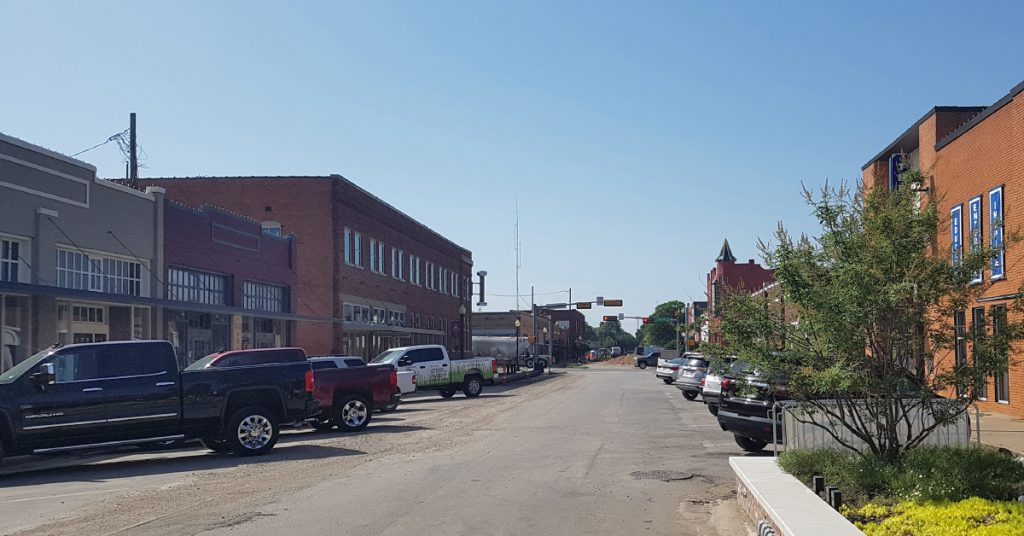
Dallas Street before project commenced

Project goals

The overall objective of the Downtown Master Plan centred around establishing more investment opportunities for existing and new local businesses to nurture economic growth for the city.

In order to achieve this, the following project goals were set:

  • Beautify the downtown area to make it a tourist and entertainment destination
  • Mitigate physical barriers that restrict movement
  • Ensure that the pedestrian experience is enhanced, without ruining the historical and cultural heritage
  • Heighten the safety, serviceability and comfort of the downtown’s streetscape
  • Make the city’s urban environment conducive for the growth of large, long-living trees

Drawing from these goals, the design focused on creating a modern, active and dynamic downtown that prioritised the pedestrian experience, celebrating the rich history and cultural heritage of downtown, while accommodating vehicular needs.

The redesigned downtown streetscape environment was also designed to encourage visitors to have authentic and unique experiences, distinguishing itself from the commodity-based retail environment of the nearby I-45 corridor.

Ennis case study images Minneapolis Metro Transit Police Department Citygreen

Dallas Street under construction

Project methodology

From the start, the city faced several constraints including a limited budget and a tight construction schedule. They also had to take into account the existing cast iron and historic brick threshold that had to be preserved, all while creating an accessible and barrier-free streetscape.

Keeping these challenges and project goals in mind, they opted to utilise the Green Streets approach. A ‘Green Streets’ approach was taken for the design of infrastructure and pedestrian improvements, in response to the goals of increasing safety, serviceability, comfort and beauty.

This meant replacing the impermeable curb and gutter section with a suspended paving system – that is, Citygreen’s Stratavault™ system. David said,

“The project evaluated the pros and cons of the typical approach with structural soil and suspended paving. It was determined that the best value would be the suspended paving system. We then compared the products on the market and chose the Stratavault™ system based on reviews, input for construction economy and cost,”

said David Newman, from MESA Design Group.

Innes website Minneapolis Metro Transit Police Department Citygreen

Design & Construction

To implement Phase I (design and construction) of the project, MESA Design Group and the City of Ennis also collaborated with the team from Gresham Smith headed by Engineer, Tim O’Brien. According to Tim,

“It’s a true team effort. MESA provided the landscape design for Phase I of the master plan implementation, while we supported their efforts by providing water, wastewater and stormwater utility design as well as civil and site design.”

MESA also enlisted the help of Construction Ecoservices and Fain Construction to equip the city’s trees with adequate soil volume to address concerns regarding pavement heaving and underground utilities.

Led by Construction Ecoservices distributor, Anthony Kendrick and Fain Construction’s installer, Noel Sanchez, permeable pavers were installed on top of soil cells to capture sheet flow from the buildings before entering the storm drain.

The system created an organised utility infrastructure corridor that facilitated repairs and maintenance, and provided a structural system supporting a permeable paver section, capable of supporting heavy duty vehicular loading. The soil mix specified as part of this system provided a high percentage of void space, optimising the growing environment for street trees and understory plantings. It also provided stormwater filtration, groundwater recharge and detention.

The Solution was Stratavault

The Stratavault™ system from Citygreen, with its affordability and eco-friendly attributes, served as a perfect solution for the requirements of Downtown Ennis. The streetscape design provided preserved and highlighted the historic beauty of the city.

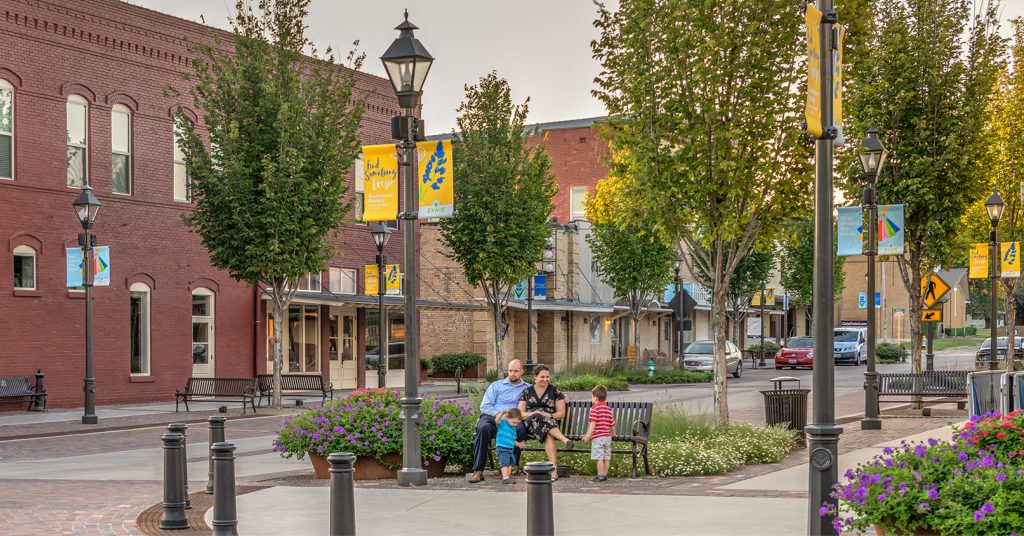
The sustainable features of the system also optimised the growth of urban trees and developed the city’s stormwater detention ability. In total, there are now over 45 different plant species throughout the downtown, all of which are native or adaptive to the region. An alley of Princeton American Elm trees in the Stratavault™ system line the street, providing a cathedral-like corridor of cool, dappled shade in the hot summer months, and allowing warm sunlight through in the cool winter months. Decorated in holiday lighting, the trees will serve as a grand sculptural lighting display during the annual ‘Lights of Ennis’ holiday festival.

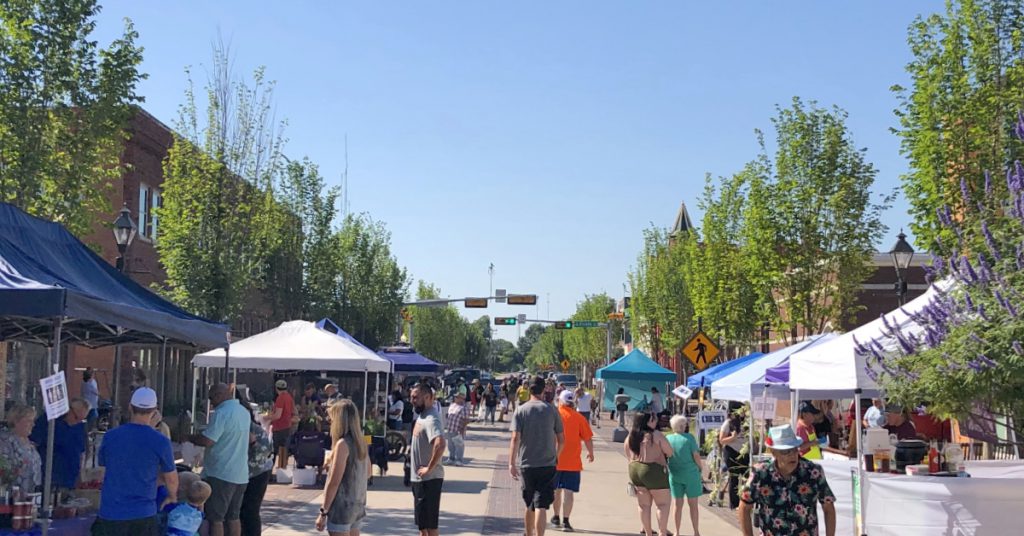
Downtown Ennis’ 19th-century vintage charm, together with the benefits delivered by the 21st-century green infrastructure of Citygreen, has now been consistently attracting more visitors and investors into the city. This influx is expected to continuously support the area’s variety of retail, restaurant, entertainment and residential businesses, making the local economy thrive in the process. The design of Dallas Street now offers a mixture of intimate and casual public spaces, as well as a variety of outdoor dining and gathering spaces suitable for activities and events throughout the year, including festivals, street markets and musical and theatrical performances.

“The key benefit that the Stratavault™ system offered was the opportunity to have mature canopy trees in the urban environment, while also offering green infrastructure components such as capturing stormwater on site. It was also reasonably easy for the contractor to understand how to install it too,” David said.

Citygreen is beyond grateful to be involved in such a significant project by the City of Ennis. In revitalising the beauty of Downtown Ennis, it has also been a privilege for us to work with MESA Design Group, Gresham Smith, Construction Eco Services and Fain Construction.

At Citygreen, we have a wide range of cutting-edge urban landscape products like the Stratavault™ system that can make your communities greener, healthier and more sustainable. If your goal is to optimise your city’s potential, speak to us today.

Download Case Study Report


Ennis case study images3 Minneapolis Metro Transit Police Department Citygreen

Ennis new Minneapolis Metro Transit Police Department Citygreen

Ennis new2 Minneapolis Metro Transit Police Department Citygreen

Ennis new3 Minneapolis Metro Transit Police Department Citygreen

Ennis new4 Minneapolis Metro Transit Police Department Citygreen


How to apply for a government grant to finance your green city project.

Are you a local government council, public space architect, town planner or property developer looking to transform your local community into a vibrant green space?

This can be a great initiative to make a real difference for the health of your suburb, the local citizens and the environment. However, these projects are often costly too.

Fortunately, governments often have certain financial grants available for sustainability projects like these.

So how do you apply for a government grant successfully?

What is a government grant?

A government grant is an application for the financial assistance given by the federal, state or local government to support a particular project.

There are grants available all over the world that can help finance your plan to build sustainable spaces. However, grants are funded by tax dollars, which means strict compliances and measures must be followed to make sure that the money will benefit the whole community.

This needs to be proven for your project to even be considered.

Being approved for a government grant is a huge deal because it means that your project will be contributing to the community.

However, there are a lot of requirements and paperwork that have to be prepared and submitted in order to apply. This process can be time-consuming and quite confusing at times, due to the requirements.

How can Citygreen help you apply for a government grant?

With strict standards on product choice, support networks, procedures, costings and proposals, attaining a grant from the government can be quite a difficult task.

But we’re here to help you.

At Citygreen, we have a team of government grant application specialists who can assist you with all the paperwork and processes, from compliance to analysis, costings and more. The added benefit is that working with a known brand like Citygreen means your project will include world-renowned products with high-quality sustainability ratings.

So, you don’t just have our assistance and expertise to help you apply for the government grant, but the products and proven green systems that we include will provide a highly compelling item to your submission.

Government grand case study: working with Citygreen

Here’s an example of a client that we helped with our grant application assistance.

Both our service as well as our products successfully secured a grant from the government. This project wouldn’t have proceeded without our assistance, and we’re so proud that we were able to help facilitate such a valuable project for the good of the local community.

You can watch their full story here: https://citygreen.com/case-studies/innovation-by-town-of-pemberton-combines-smart-water-harvesting-and-reuse-with-tree-vault-bmps-by-citygreen/

Do you want to apply for a Government grant?

Citygreen is passionate about helping you achieve your goals of protecting our planet with sustainable solutions. For quality government grant application services with state-of-the-art products, contact us today!

The Effective Solution to Preventing California Fires

California is known for many things–Disneyland, Hollywood, its beaches and more. But now more than ever, with the frequency of wildfires in the state, it seems that people cannot avoid mentioning the fires when the topic of California comes up. They’ve gotten so frequent that Californians residents are no longer surprised when a fire sweeps through. Can something be done?

California Wildfire

California’s yearly fire season

California’s fire season has gotten worse over the years –lasting longer and becoming more destructive. Compared to the prior decades, the fire-affected zone has doubled every year since the year 2000. Unfortunately, it’s believed that this will only worsen over time. After more than a century of suppressing these fires, Californian forests are now overgrown, and this poses even more of a danger. Some parts of the land hold three to five times as many trees compared to previous years. Now that they are crowded into a small space, trees have also grown weak as they compete for water, nutrients and sunlight. On top of that, shrubs and small plants tend to multiply in wet weather, increasing the risk of kindling once dried.

How can this be prevented?

You may think that there is no solution -but some smart tactics can actually be implemented to help limit these forest fires. These tactics aim to restore the forests back to healthy, historic conditions where the trees were widely spaced apart from each other with diverse native grasses and wildflowers growing below. These techniques are often referred to as climate-smart or holistic forest restoration. The most critical thing to do now is to bring back vitality to the forests. Thinning overgrown trees and leaving the largest and most flame-resistant trees can help the land survive the unpredictable climate. With empty spaces left behind by strong flames, new seedlings can be hand-planted at more of a distance apart to prevent the widespread of fire in the future.
It’s only a matter of time before these vast forests become natural casualties to the dreaded California wildfires-so it is important that we do whatever we can to help counteract these catastrophes. At Citygreen, our vision revolves around turning the world into an effective green space where all mankind can sustainably benefit from its natural resources. That’s why we align our products and solutions towards building and nurturing a healthy environment.

Source: News article
Image: https://www.latimes.com/
Load More...

“Great customer service, quick response times and a very in depth QA system with constant support.”

- Laura Wiesenekker, Project Engineer, Densford Civil -

“Citygreen is a very professional  business, and I found everything was great in terms of deliveries, product supply and information. It was all forthcoming and helped us to complete the project.”

- Keith Burns, Architect/Designer, Keith Burns Architect -

“Citygreen offered training and invaluable technical assistance during the works.”

- James Callan, Estimating Manager, Complex Co Pty Ltd -

“Our experience, in working with a Citygreen Design Studio was second to none. We found responses from the design studio to be very timely, and technically thorough. We went backwards and forwards a number of times, looking at different iterations of the design and, nothing was too much trouble to examine and explore different possibilities. I would highly recommend the Citygreen Design Studio to any future client considering using your services.”

- Sandra Smith, Principal Landscape Architect, City Of Monash -

“We are big on compliance on all projects, and the fact that their SmartCertify cloud platform covers all bases, and supports their 20 year warranties, is critical – especially that these pits are being installed under roadways and footpaths.”

- Johny Purkaystha, Civil Program Engineer, Central Coast Council -

"I reviewed all the previous projects that we have installed in the past couple years using your product and I can happily report back that we have 0% mortality in the soil cells, which is incredible!"

- Brendan Wilton, CEO, Trim Landscaping, Bedford, Canada -