Urban forests proven to decrease symptoms of depression

It’s widely accepted that urban trees have a positive impact of health, promoting feelings of wellbeing and happiness. However, recent studies have shown that trees can play a powerful role in reducing symptoms of depression.

According to the National Institute of Forest Science (NIFoS), people living in cities with vast green spaces are 18.7 percent less likely to suffer from depression than those living in a city with sparse urban forests.

The findings are based on research from Prof. Lee Jong-tae of Korea University, who evaluated 651,128 adults living in seven metropolitan cities to determine the link between urban forest and depression symptoms, together with data from the National Health Survey, which confirmed that urban forests relieve depression.

The study assessed the forest cover in each city by calculating the Normalized Difference Vegetation Index (NDVI) using sophisticated satellite imagery, and divided cities into four districts from the least forested to the most.

The study also accounted for the effects of other factors that could have an impact on depression, such as gender, occupation, education level, income level, marital status, health and the local economy. CES-D questions were then used to assess levels of depression.

Total scores greater than 16 were considered to indicate symptoms of depression and were subjected to further examination.

As a result, when assuming the relative risk of depression in areas with the least urban forest as 1, the average risk of depression in people living in the city with the most urban forest was 0.813 – a significant 18.7 percent lower.

The results were published in the International Journal of Environmental Research and Public Health, together with results from a statistical analysis on the mental health promotion effects of urban forests, which reduces the damage caused by fine dust and heat waves. These suggests hope for the positive effect on mental health just by spending time in urban forests.

“This research is scientific proof that urban forests not only function as an environmental improvement system for fine dust and heat waves, but also function to foster people’s mental health,” said Kwon Jin-oh, head of the Urban Forest Research Center.

“Urban forest encourages residents to exercise and bond with their neighbours, which will promote good mental health.”

“Urban forests can increase physical resistance to air pollution by improving the health of residents, and can also reduce fine dust,” said professor Lee.

“Creating urban forests is important as one of the strategies for reducing and adapting to fine dust.”

“Not only are people threatened physically, but mental health is being constantly threatened due to continuing heavy fine dust regardless of the season,” an NIFoS official reported.

“As more research is being released that proves increasing fine dust affects mental health, the role of urban forests to reduce fine dust becomes increasingly important.”

Urgent action needed to restore Canberra’s tree canopy

Across the ACT, there are over 768,000 trees on public land. However, mature trees are being cut down at an increasing rate, while juvenile trees are either dying or going missing. As a result, the urban forest is declining by around 3,000 trees per year– and current rates of replanting are insufficient to save it.

In the 2017/18 financial year, only 1,450 new street trees were planted by the City Services Directorate as part of its annual tree planting program. During this period, two in five Canberra suburbs had canopy coverage of less than 20 per cent, while only four out of 60 suburbs had coverage of more than 30 per cent.

According to ACT Greens crossbencher, Caroline Le Couteur, who obtained the data, the government needs to plant an extra 7,000 trees annually to help restore the city’s canopy.

“It’s unacceptable, at a time of rising temperatures in the bush capital, that Canberra should see numbers of trees decreasing. The last report on this issue, from seven years ago, showed that our streets and parks needed 40,000 trees to fill the gaps and replace dying trees, and unfortunately that number would be much higher now,” Ms Le Couteur said.

The data was released after Canberra experienced its longest ever run of days above 40 degrees in January 2019. The heatwave prompted an ACT Legislative Assembly inquiry into Canberra’s declining nature, in which a lack of investment in the urban forest was cited as a key factor.

“Failure to commit appropriate funding to renew and enhance Canberra’s living infrastructure is perhaps the most serious threat,” said the Australian Institute of Landscape Architects’ submission into the inquiry.

It cited a 2017 study from AECOM, which found increasing tree canopy by just 8% (from 20% to 28%) led to a four-degree reduction in air temperature and a 14-degree reduction in surface temperature. It also found that a 10% increase in tree canopy resulted in property values rising by an average of $50,000.

Environment Minister Mick Gentleman also supported more tree planting in the government’s submission, which said that investing in natural assets was the most efficient and economical way of combatting climate change.

“With urban intensification, vegetation in the form of canopy trees and watered grass in the public realm is increasingly the city’s air conditioner,” he said.

A green view: How seeing trees from your window improves wellbeing

david tip 9I0J6jU0qaI unsplash scaled e1617083580910 Citygreen

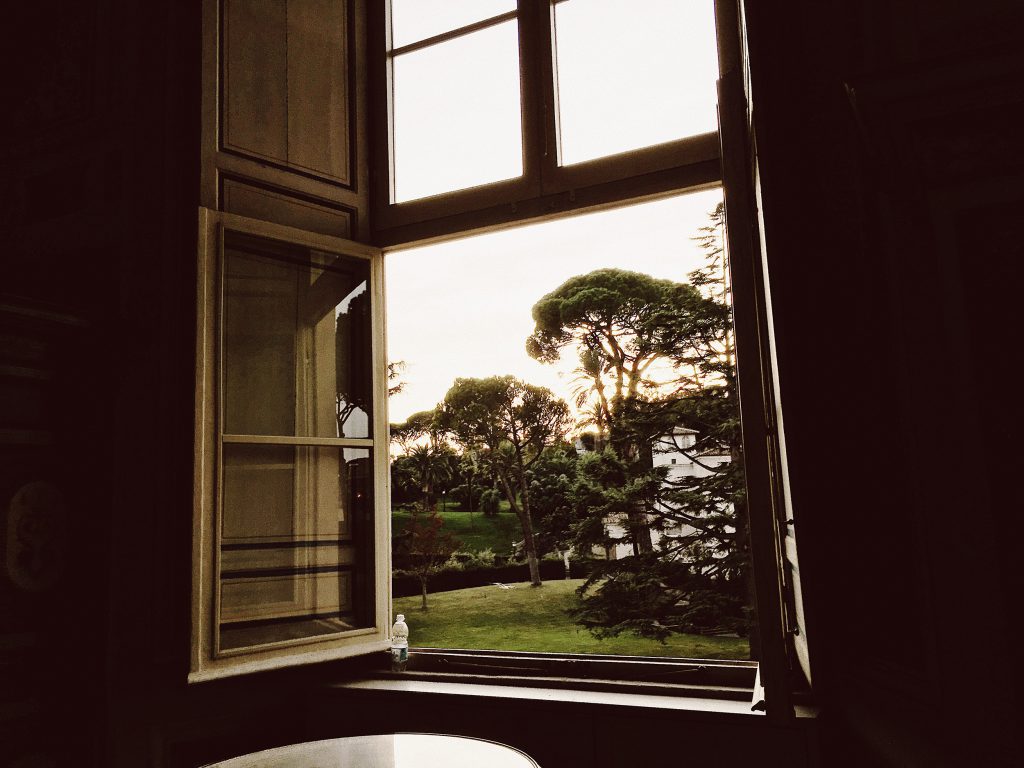
A new study from the UK highlights the importance of urban trees as a matter of health. The study, which combines research from England and New Zealand, concludes that people who can see trees from their window are happier and healthier – particularly in high density housing areas.

Now, New Zealand campaigners are citing the study to strengthen their argument for improved tree protection measures.

New Zealand’s Tree Council secretary, Dr Mels Barton says: “The link between people living at one property and valuing something else across the road comes out as so, so, important – and it’s not been demonstrated before,” she says. “We will definitely be waving [the report] around; there is not enough research into the benefits of urban trees.”

The study refers to the increase in physical and mental health conditions that result from urbanisation. It also presents evidence of how urban trees help combat these conditions by providing “indirect nature experiences”.

“With the rise in urban living, most people now spend much of their day indoors, therefore the green viewscape from home or from work often constitutes by far their most common nature experience. Having a room with a view of nature does not necessarily mean that people are continuously experiencing that view. Instead, people spend a significant amount of time with their attention directed towards specific tasks, and the presence of a window with a natural scene allows micro-restorative experiences, with scenes that are more fascinating being likely to be more restorative. There is robust evidence to suggest that indirect nature experiences provide a broad range of health and wellbeing benefits, including increased psychological wellbeing, improved cognitive function and concentration, reduced healing times and reduced stress at work,” it says.

Given the health benefits of urban trees, Dr Barton says the study supports the idea that trees belong to communities, not to individuals.

view from window PX3GNKY Citygreen

“Your tree is not just your tree,” she says. “It really belongs to those people who can see it. It really affects people’s well-being and it’s important to them. So, it shouldn’t be your right to make the decision to remove it. Trees are being removed every day. We want that to stop before it’s too late.”

The study also has implications for inner city streetscapes, as well as residential areas.

“The layout of cities and where we put specimen trees is really important”, says Dr Barton. “Auckland in particular has developed ad-hoc with all these pocket parks as development contributions that are too small to put a house on … they’re really of almost no benefit.”

The bottom line, according to Dr Barton, is that trees should be planted where they can be seen – and where their benefits can be enjoyed by many.

Moonee Valley’s urban forest plan shortlisted for global prize

The City of Moonee Valley in Melbourne has been shortlisted for a major international award, thanks to an ambitious plan to plant 30% more trees by 2040.

Known as the Wellbeing City Awards, the is divided into four categories: Community, Economy & Opportunity, Public Health and Sustainable Environment. Moonee Valley is competing in the Sustainable Environment category, which promotes the idea of recognising city-led action on “urban wellbeing”.

The city was nominated by a panel of esteemed judges, including entrepreneur Arianna Huffington and architect Daniel Libeskind. It’s the only Australian city in a field of 16 global contenders that incudes Los Angeles, Milan, Lisbon and Avia.

“We’re very excited to be part of this award, particularly as we are the only nomination from Australia,” says Moonee Valley mayor Narelle Sharpe. “It certainly makes it a bit more special, considering there were 100 applications.”

The plan to increase Moonee Valley’s tree canopy is the result of more than two years of community consultation and was endorsed before the award nomination.

“The main area that kept cropping up was ‘a healthy city’,” says Cr Sharpe of feedback from residents, adding that the extra trees will provide cooling and shade, plus a more pleasant environment for people to socialise, live and shop.

While the mayor would like to increase tree canopies across the whole of Moonee Valley, she says the primary area of focus will be the areas along the Maribyrnong River.

As part of the urban forest plan, the council has endorsed moves to protect existing trees, as well as planting new ones. This will be made possible using processes similar to heritage overlay, however residents have also been encouraged to nominate trees worthy of protection.

“People are really getting behind it,” says Cr Sharpe. “[We] had one gentleman who was upset that his tree hadn’t been nominated and it was on his property.”

Winners of the Wellbeing City Awards will be announced at an event in Montreal, Canada in April 2019.

Green building improvements invigorate Canberra’s city gateway

Green building improvements invigorate Canberra’s city gateway

Northbourne avenue

The iconic Sydney and Melbourne Buildings hold a special place in Canberra’s cultural and physical history. Built in the early stages of Canberra’s formation, the buildings are prominently situated in the heart of the city – clear landmarks that signal entry into Australia’s capital.

In 2018, the ACT Government engaged the City Renewal Authority to restore these historical sites with landscaped verges and upgraded amenities. Citygreen collaborated with key stakeholders, including dsb Landscape Architects and Complex Co, to refresh the building verges with vibrant street trees.


Project goals

The primary goals of the project were to revitalise the building verges, improve access, and create a more pedestrian-friendly area that was safer and easier to get around.

By improving the look, feel and function of the sites, the works aimed to create more opportunities for street cafes, outdoor trading and public enjoyment. That meant adding shade, colour and character to the space with healthy trees.

As Michael Reeves from dsb Landscape Architects explained, “The design responds to potential activities on the building verges. The existing verges were limited in width, so there was inadequate space to accommodate any viable commercial or social activities. There were no trees or ground level planting.”

“The design strategy was to widen the median, repave the verges in quality bluestone and black granite, and introduce trees in planter beds along the verges. The design incorporates arboriculturally shaped trees to create a shaded canopy in summer and provide vertical definition to the space. Deciduous trees are equally important to allow sun penetration in the winter. It is anticipated that the widened and upgraded verges will be popular as a meeting place.”

Northbourne Ave

Project challenges and solutions

The project posed some significant challenges for the landscaping and construction teams. As the Sydney and Melbourne Buildings are heritage listed, a proven solution was needed to ensure the sites wouldn’t be disturbed by tree roots. It was also essential that the landscape solutions could support substantial pavement loading and be efficiently installed around other services.

“A requirement of the Heritage Management Plan for these buildings is that they be permanently protected from disturbance from tree roots. The proximity of a water main and adjacent cycle lanes and pedestrian pavements required a subsurface infrastructure that supported the tree planting and the pavements above”, said Michael from dsb Landscape Architects.

Citygreen’s Stratavault soil cell system was chosen for its ability to meet the project’s needs. As well as providing ample soil volume to support trees to maturity, Stratavault is engineered to achieve major reductions in labour time and installation costs. Modules snap together quickly to form an interconnected matrix, which was ideal for this project.

As James Callan from Complex Co said, “The Stratavault system was used to transfer pavement design loads without compromising the planting media used for the planting of new street trees. The Stratavault ‘matrix’ design also accommodated installation of electrical conduits for feature lighting, construction of light column footings and installation of stormwater drainage services.”

James also praised the Citygreen team, adding that “Citygreen offered training and invaluable technical assistance during the works.”

Northbourne Ave

Project outcomes

Since completion in late 2018, the new landscaped verges have enhanced the city space, both practically and aesthetically.

“Exotic deciduous trees, quality landscape pavements and urban design elements contribute to the establishment of outdoor dining opportunities and enhanced social activity in widened verges adjacent to the Sydney and Melbourne Buildings”, said Michael from dsb.

“The Civic Precinct and Northbourne Avenue verge landscape design builds resilience into the landscape treatments and achieves an iconic and legacy landscape character that will thrive into the next 50-100 years”, he added.

James from Complex Co confirmed this view, saying “The newly planted street trees are establishing well, and the pavement is in excellent condition.”

The landscaping improvements are complemented by seating, lighting and a new raised cycling path, which combine to create a more welcoming vibe in Australia’s capital city.

At the formal opening in November, Chris Steel, Minister for City Services said, “This is the most significant improvement work conducted on the Sydney and Melbourne building precinct for a long time and we hope all Canberrans will enjoy our revitalised city centre.”

Local businesses agree, with restaurant owner Pasquale Trimboli saying the works have “cleaned up the area” and “brought the Sydney building back into play.”

Northbourne Ave

SmartCertify Registration

SmartCertify Compliance Software


The SmartCertify platform makes the installation Q/A phases of projects faster and easier for all stakeholders.

SmartCertify enables the installation team to snap progress photos using their smartphone or tablet, at set hold points throughout construction, and upload in real-time to the cloud. This enables Citygreen’s technical team, as well as other project partners, real-time updates on installation progress.

Giving the installers peace-of-mind that they have experienced support throughout the construction stages on both most efficient and correct installation methods.

Benefits to construction teams

  • Free service available for all Citygreen projects.
  • One central platform; visible to all members.
  • Streamlined ITP checklist, showing witness-points and hold-points.
  • The phone app enables fast capture of each stage and uploads directly to the cloud.
  • Each photo uploaded by phone is automatically geo-tagged (GIS), and notes are taken on matching ITP number and tree ID.
  • Citygreen’s engineers and project coordinators have visibility of this platform, and can quickly provide feedback and direction throughout installation if any challenges or questions arise regarding methods of the construct.
  • By completing this process, and the correct method of install, projects are Citygreen compliant and receive the Construction Certificate and full Warranties (20 Years).

Benefits to specifiers (Engineers, Landscape Architects) and the client

  • Free service available for all Citygreen projects.
  • One central platform; visible to all members.
  • Peace-of-mind that installation is as per the design and specification.
  • Being an engineered system, this forms a great asset registrar of placement of these tree pits for future reference.
  • The structural pits are fully warranted and compliant.
  • Risk management is adequately covered for all parties, as proof-of-method of install fully documented.

Why compliance is essential

Citygreen’s methodologies are known as ‘engineered void structures’ by definition, for the benefit of trees and stormwater.

Since the first installations of our structural systems over two decades ago, we have never had a product failure, which is no coincidence. We invest a portion of every revenue dollar into research and development and pride ourselves in engineering the strongest, fastest, and most sustainable void structures on the planet!

However

Yes, there have been a small handful of project pavement failures around our structural systems. At each site inspection, we identified the cause/s, with the same trends on each site: incorrect installation method.

This platform has been designed to make your job easier, save you time, and give compliance on the run.

Are you an Accredited installer? All Citygreen Soil Vault installers must be certified; please visit the Citygreen Academy.

Citygreen Academy Button 1 Citygreen
SmartCertify

SmartCertify Registration Form

Register your project today by filling in the details below – and one of the team will be in touch to take it forward!

Edward Street, Brisbane – Australia

Edward Street, Brisbane – Australia

Platipus Case Study Edward Street Brisbane 01 Citygreen

Project Specification

An upgrade project started in September 2016 to transform this area of the Central Business District into a world-class retail environment with open footpaths and a tree-lined boulevard. 25no. Kauri Pines were planted in areas with buried services and the City Project Office did not want to restrict pedestrian access by using wooden stakes or above ground guy wires to support the transplanted trees.

Platipus Case Study Edward Street Brisbane 02 Citygreen Platipus Case Study Edward Street Brisbane 03 Citygreen

The Platipus Deadman Fixing System with Plati-Mat was specified to anchor the trees and to provide a clear aesthetic finish to the landscape. This system allowed tall 7 –9m high trees to be planted in restricted planting areas without damaging the buried services and still provided excellent stability and support to keep the trees secure. To minimize the impact on local traders, the installation was conducted at night and Cirtex Australia Ltd provided on-site advice to ensure this was done efficiently.

Tree Anchoring System: RF3RDMP

Platipus Case Study Deadman System Citygreen

How Planting Urban Trees Benefits The World

how urban trees benefit the world hero image

Considering the worlds excess carbon emissions, urban trees are not just nice to have around but crucial. Through the miracle of photosynthesis, trees breathe in carbon dioxide and breathe out vital oxygen. However, urban trees do far more for the world than help with our greenhouse problem.

For a start, trees make us happy. Studies from Australian universities analysed 2.2 million tweets on Twitter and found that tweets made from parks were more positive in nature than tweets from built-up areas. So why are people in parks so happy?

In a world that’s becoming increasingly urbanised, parks provide a welcome respite from the stress of living in cities. With nine out of 10 Australians live in urban areas – and two thirds of Australians live in capital cities – more people are flocking to parks to exercise, meet friends and attend events. We’re also getting back to nature to combat the health risks – both physical and mental – of high-density urban living.

Decades of research shows that experiences of nature are associated with a wide range of positive health outcomes, including improved physical health (such as reduced blood pressure and allergies), improved mental health (such as reduced stress), greater social wellbeing and uptake of positive health behaviours. Whether it’s walking the dog, strolling in the park or playing games outdoors, being connected with nature provides proven relief from stress and anxiety.

Related: How to Plant Trees in Urban Areas

Then, of course, there are the environmental and economic benefits that urban trees undoubtedly bring. According to environmental planners at Griffith University, Australian cities are getting hotter, noisier and more crowded – and climate change is causing more heatwaves. Rather than increasing air-conditioning, which in turn increases carbon emissions, the better solution is green infrastructure – street trees, green roofs and walls, and vegetated surfaces.

Compared to hard surfaces like concrete, asphalt and stone, which increase urban temperature, green roofs and walls can naturally cool buildings, significantly lowering the need for air conditioning. Plus, according to Griffith’s environmental planners, shading from strategically placed street trees can lower surrounding temperatures by up to 6 degrees – or up to 20 degrees over roads.

Considering the wide-reaching positive outcomes to environment, happiness and health, if there’s one thing the world needs more of, it’s trees.

Load More...

“Great customer service, quick response times and a very in depth QA system with constant support.”

- Laura Wiesenekker, Project Engineer, Densford Civil -

“Citygreen is a very professional  business, and I found everything was great in terms of deliveries, product supply and information. It was all forthcoming and helped us to complete the project.”

- Keith Burns, Architect/Designer, Keith Burns Architect -

“Citygreen offered training and invaluable technical assistance during the works.”

- James Callan, Estimating Manager, Complex Co Pty Ltd -

“Our experience, in working with a Citygreen Design Studio was second to none. We found responses from the design studio to be very timely, and technically thorough. We went backwards and forwards a number of times, looking at different iterations of the design and, nothing was too much trouble to examine and explore different possibilities. I would highly recommend the Citygreen Design Studio to any future client considering using your services.”

- Sandra Smith, Principal Landscape Architect, City Of Monash -

“We are big on compliance on all projects, and the fact that their SmartCertify cloud platform covers all bases, and supports their 20 year warranties, is critical – especially that these pits are being installed under roadways and footpaths.”

- Johny Purkaystha, Civil Program Engineer, Central Coast Council -

"I reviewed all the previous projects that we have installed in the past couple years using your product and I can happily report back that we have 0% mortality in the soil cells, which is incredible!"

- Brendan Wilton, CEO, Trim Landscaping, Bedford, Canada -