Seattle’s big trees: Advocates call for more protection

Seattle
A new charge to protect Seattle’s treasured city’s trees is under way, after stalled efforts to update tree regulations last year.

A new tree ordinance was proposed by the Seattle City Council in 2018, but advocates said that it weakened protections for the city’s “exceptional” trees – the large trees that help most with cooling, carbon emissions and stormwater. Last year’s ordinance didn’t pass, but City Council is expected to pass new legislation that will help retain these treasured trees, particularly in environmentally stressed areas.

Environmental group, Plant Amnesty, believes there are around 6,000 “exceptional” trees left in Seattle, which are 30 inches wide or more – basically the width of a front door. Dominic Barrera, Plant Amnesty’s Executive Director, said that trees provide an important buffer from warehouses and Boeing Field.

“Looking at that juxtaposition of the industrial district and then a few trees that protect us from it just really shows how important these trees are for everybody,” he said. “Especially those of us living in those environmentally tarnished areas.”

In Northeast Seattle, the century-old Douglas Firs around the Seattle Audubon office is just one example of an iconic tree that characterises the city, while combatting noise and air pollution.

Joshua Morris, the urban conservation manager with Seattle Audubon who also serves on the Seattle’s Urban Forestry Commission, said he supports more tracking and protections for existing trees.

“We’ll never see the size of these trees again. They’re treasures, and hopefully we can convince Seattleites of that, and write something into the tree protection ordinance.”

He also said the new regulations must strike the right balance so property owners will comply. “There’s difficulty ensuring compliance, getting private property owners to actually comply with a tree ordinance, not making it onerous or too high a permit fee.”

Developers will be watching closely to see whether new tree regulations restrict building projects or create additional costs.

While there’s currently no requirement for developers to plant larger or more mature trees, this strategy could help Seattle increase its tree canopy. So could the introduction of permits for tree removal, which has helped the suburb of Lake Forest Park increase tree canopy in recent years from 46 percent to nearly 50 percent.

Lake Forest Park City Council member John Resha said, “Our regulations are focused on the end state of maintaining and growing canopy rather than restricting removal.” But he said, “There is one place where we say no.” That’s the removal of trees that qualify as ‘exceptional.’ “These quiet giants are part of the fabric of our city,” Resha said. He said they’ve successfully grown their canopy by creating a city code “that resonates with its community.”

Plan to link and protect Melbourne’s urban forests

Melbourne

Melbourne has launched a bold new plan to improve the connectivity and extent of its urban forests. The plan, entitled, Living Melbourne: our metropolitan urban forest was developed by The Nature Conservancy and Resilient Melbourne and aims to “create a profound shift in the way we think about, value and grow Melbourne into the future”.

As part of the plan, trees in the city will be mapped to understand what species exist, why they exist, and what can be done to protect and expand urban forests. It’s the first time that such a vast area of Australia has been mapped.

City of Melbourne Lord Mayor Sally Capp said the Living Melbourne strategy unites local governments and land authorities around the protection and enhancement of urban forests.

“Melbourne is renowned for its parks and gardens. A healthy urban forest is crucial to maintaining our status as one of the world’s most liveable cities, and enhancing the wellbeing of our residents and visitors,” she said.

“The Living Melbourne strategy has mapped all the trees, shrubs and vegetation across public and private land in the greater Melbourne metropolitan area, highlighting the areas that have abundant greening and those that have very little”.

“Nature doesn’t care about municipal boundaries, which is why it was so important for us to collaborate with Melbourne’s 32 councils, the Victorian Government and other authorities to ensure a consistent approach to protecting and growing our urban forests.”

During mapping conducted during the strategy development, Greater Melbourne was found to have a total of 15 per cent tree canopy cover. The eastern region has the highest cover (25 per cent), followed by the inner south-east region (22 per cent) and, finally, the western region (4 per cent).

Land surface temperatures were also studied to determine where the urban heat island effect had the biggest impact. Findings indicated that, on average, temperature hot spots occur in areas that have less than 3 per cent vegetation cover and no tall trees.

Cathy Oke, Chair of the City of Melbourne Environment Portfolio Councillor, said the Living Melbourne strategy would help address the impacts of climate change on the environment and population.

“Within the City of Melbourne, our vast urban forest of 70,000 trees is under threat from the effects of climate change, such as extreme heat,” Cr Oke said.

“While we are already taking action to boost greening, including planting 3,000 climate resilient trees every year, there is so much we can learn from our neighbours while sharing our experiences as well.”

“Living Melbourne’s six recommendations for healthy people and nature align closely with our own commitments and strategic framework to take urgent action on climate change.”

The Living Melbourne plan is the culmination of over three years of collaboration between The Nature Conservancy and Resilient Melbourne. It has been formally endorsed by 41 organisations, including the City of Melbourne.

Four ways trees enrich U.S. life, now and throughout history

Across the U.S., trees are branching out to signal the start of summer. While the beauty of trees is always appreciated, we often take the benefits for granted. However, research shows that trees add significant value to U.S culture – now and throughout history. Here are four expert views on how trees enrich our lives.

  1. Greening and cooling city streets

Urban trees haven’t always been part of U.S. landscapes. The first major U.S. tree-planting campaign launched in New York City in the 1870s, led by physician Stephen Smith, who believed that trees could save lives by providing shade during heat waves.

While it took several decades to win legislative support, other New Yorkers joined the cause. In 1897, they started forming committees to plant trees in front of homes, schools and tenement blocks.

“For these early activists planting trees was a way to cool streets and buildings in the summer and beautify the city’s gritty urban landscape,” says Harvard University landscape architecture professor Sonja Dümpelmann.

“Only later would scientists come to realise the enormous potential that urban trees besides entire forests held in mitigating the effects of climate change.”

  1. Holding down the Great Plains

During the 1930s, planting trees was so crucial to the mission of the Civilian Conservation Corps (CCC) that the agency was nicknamed “Roosevelt’s Tree Army”.

The CCC was invented to put young men to work on practical tasks during the Great Depression. Soil conservation was one such task, to combat dust storms ravaging the Great Plains.

CCC members planted an incredible 3 billion trees in national forests throughout the U.S. as well as a “shelter belt” that stretched from North Dakota south to Texas, holding vulnerable soil in place. They also reseeded U.S. national forests across the country.

Benjamin Alexander, a historian at the City University of New York, sees the CCC as a predecessor of the modern conservation movement:

“Although it is hard to picture a CCC-style initiative winning political support today, some of its ideas still resonate. Notably, the Obama administration’s economic stimulus plan and some proposals for upgrading U.S. infrastructure present federal spending on projects that benefit society as a legitimate way to stimulate economic growth. The CCC combined that strategy with the idea that America’s natural resources should be protected so that everyone could enjoy them.”

  1. Improving urban air and water quality

Trees are regarded as a valuable investment by many city planners today. Theodore Endreny, a professor of engineering at the State University of New York’s College of Environmental Science and Forestry, put a dollar figure on that value by calculating it with his research team.

“Trees clean the air and water, reduce stormwater floods, improve building energy use and mitigate climate change, among other things,” Endreny says. “For every dollar invested in planting, cities see an average US$2.25 return on their investment each year.”

Endreny’s research group went further to developed a free software package called i-Tree Tools that estimates how trees will help to mitigate flooding, air pollution, building energy use and carbon dioxide emissions in a specific community. They found the benefits of trees were particularly great in huge global cities like Beijing, Cairo and Mexico City. They also found that all these cities, even the greenest and leafiest, had potential to add more trees.

  1. Making streets safer

On most U.S. city streets, trees are planted in pits on the sidewalk, primarily for aesthetics and shade. However, Anne Lusk, a research scientist at the Harvard T.H. Chan School of Public Health, says trees can add even more value when planted as part of smartly designed transportation networks with separate paths for cars and bikes.

In a survey of Boston pedestrians and cyclists, Lusk’s team found that people strongly preferred streets where rows of trees or bushes separated sidewalks and cycle tracks from the street. Respondents said this formation would make them feel safer, cooler and less exposed to pollution from cars.

Lusk believes these designs should also be maximised to keep urban trees healthy and people happy, saying trees should be an integral part of reimagining urban transport.

“It is time to put equal effort into designing green streets for bicyclists, pedestrians, bus riders and residents who live on transit routes, as well as for drivers,” she says.

Source: https://theconversation.com/the-value-of-trees-4-essential-reads-116047

The vital role of Trees in Urban Landscape Design

trees and urban landscape design of green square library

Trees are beautiful to look at – the lush greenery, the sound of leaves, the way the connect the Earth to the sky. However, as William ‘Chip’ Winslow – a landscape architecture professor at Texas A&M University – explains, trees bring more than aesthetic value to urban landscape design.

“The biggest things that trees provide for us are ecosystem services, which helps the entire environment,” Winslow says. “Many people don’t realize that not only do they give off oxygen, essential to our survival, but trees can help absorb water through their root systems.”

Trees soak up water and help minimise the damages caused by heavy rainfall and flooding. They also decrease stormwater runoff when planted as part of a wetlands system. “If it’s the right tree in the right place,” says Winslow.

“The services that trees bring, such as shade, add value to an area. When you get rid of a tree, you don’t get those anymore, so that value drops.”

Trees are clearly valuable, yet they still aren’t being incorporated into every architectural or landscape design. This is partly because businesses don’t understand (or prioritise) the benefits.

“People want their signs and storefronts to be seen and don’t want to deal with fallen leaves and branches, plus there is always ongoing maintenance to be done to keep a tree healthy,” Winslow says.

It can also be difficult to build around a tree or insert one into a specific place. Tree root systems are vast, and the health of a tree’s roots can determine whether a tree lives or dies. As such, the right systems and care are required to preserve or add a tree to a landscape.

To add a tree, contractors must ensure the tree and its roots have adequate space to expand and grow. Without the required space, the tree’s root system may be suffocated, eventually killing the tree.

Once planted, trees need to be regularly assessed for health. A landscape design that incorporates a tree into its look will be significantly diminished if that tree dies. That’s why careful consideration is needed to choose the most suitable species before construction begins.

A final thing to consider when designing a green urban space is the history of the area or the tree you are building around. Many cities have rules that forbid removal of heritage trees, or trees over a certain size.

“These are the kinds of trees that are part of and belong to the community, not just the landowner,” said Winslow.

A stunning example is Texas A&M’s famous Century Tree. As well as being a large, attractive live oak, the Century Tree is part of the tradition and culture of the university.

“Heritage trees like this one are part of the history of an area and certainly must be planned around,” Winslow said.

Koalas can live the city life with suitable green spaces

Australia is one of the world’s most urbanised countries, with 90% of the population living in cities and towns. With Australia’s population predicted to increase to over 49 million by 2066, urban development is on the rise. As infrastructure increases, so does the threat to our native wildlife – particularly our precious koala population.

The good news, according to a recent study, is that koalas can learn to live the city life – as long as they are provided with enough suitable green space.

In newly published research by Frontiers journal – a leading open access publisher and science platform – stress levels in wild koalas were measured according to their habitat. The study found that koalas are most stressed in rural and rural-urban fringe zones, where threats like heatwaves, bushfires, dog-attacked and vehicle collisions are highest. Comparatively, koalas living in urban areas are less stressed, provided they have access to suitable green habitats.

In other words, with the space, time and freedom to adapt, koalas can co-exist with human populations.

We can help make urban environments more suitable for koalas and other wildlife species by ensuring their basic needs for food, water and shelter are met – and by considering their needs as part of planning approvals and the creation of urban spaces.

Currently, in Australia, urban design is not green enough. Even in suburbs with plenty of trees and green space, problems still arise because urban planning typically designs for human recreation. It doesn’t consider the wildlife that was living there before the housing development went up. This needs to change.

Providing wildlife crossings in urban areas is part of the solution, together with driver education programs. Most importantly, urban developments need to incorporate more healthy green trees with vast coverage and canopy – and in the right species to accommodate local wildlife.

Measures like this can minimise impacts on koalas and make the adjustment to city life much smoother.

New York City’s tree alphabet will create a living language

New York artist, Katie Holten, has created an innovative New York City tree alphabet in dialogue the NYC Parks Department. Soon, she will lead the planting of messages from the local community with the living typeface.

Each letter of the alphabet is represented by one of the city’s native or non-native trees –ranging from the elm with its twisting branches for E, to the cone-shaped umbrella pine for U. The letters also signify how the urban forest is changing due to environmental impacts.

“Planting trees is political,” Katie said. “In a sense, the entire A to Z itself is a reflection of climate change.”

“I wouldn’t have felt compelled to make [the tree alphabet] if everything was hunky dory. A large part of the project is the simple fact that it’s a fun, accessible way for people to learn about New York City trees and see how natives, non-natives, and other species new to New York City are all being planted together.”

The idea for a tree alphabet first sparked when Holten was working on her 2015 book, About Trees.

“As soon as I made the book I realized that a tree alphabet could potentially be used as a planting guide, you could use it to plant messages in the landscape with real trees,” she said. “It was so simple, so obvious, begging to be done.”

Holten developed the New York City tree alphabet while participating in the Arts and Humanities Residency Program at Fort Totten Park’s Urban Field Station in Bayside, Queens.

Despite being known as a concrete jungle, New York has a diverse and impressive array of flora, which is easy to overlook while walking through a park or street. Many of these interesting species – like the Tuliptree or towering Redwood – are represented in the alphabet.

In creating the tree alphabet, Holten communicated with NYC Parks to ensure each letter ultimately reflected the current conditions in the environment.

“Parks has three planting palettes: for streets, parks, and forests,” Holten explained. “Their planting lists are shifting — there are trees they’ve planted a lot in the past, but no longer plant for various practical reasons; there are trees new to New York City that they’re planting because of the changing climate.”

There are already deliberate patterns to New York city’s, whether anticipating climate change, addressing tree diseases, or choosing specimens that will be the right fit for a specific neighbourhood. Now Holten, together with NYC Parks, hopes to plant them in messages – a living language that will encourage literacy about local nature, the effects of climate change, and conservation.

“Everyone’s invited to share messages with us and we’ll select one — or more — to plant,” Holten said. “I’m excited to see people’s love letters, as I call them. Of course, the first word I wanted to plant was ‘Resist.’”

The New York City tree alphabet is available to download as a free typeface.

Urgent action needed to restore Canberra’s tree canopy

Across the ACT, there are over 768,000 trees on public land. However, mature trees are being cut down at an increasing rate, while juvenile trees are either dying or going missing. As a result, the urban forest is declining by around 3,000 trees per year– and current rates of replanting are insufficient to save it.

In the 2017/18 financial year, only 1,450 new street trees were planted by the City Services Directorate as part of its annual tree planting program. During this period, two in five Canberra suburbs had canopy coverage of less than 20 per cent, while only four out of 60 suburbs had coverage of more than 30 per cent.

According to ACT Greens crossbencher, Caroline Le Couteur, who obtained the data, the government needs to plant an extra 7,000 trees annually to help restore the city’s canopy.

“It’s unacceptable, at a time of rising temperatures in the bush capital, that Canberra should see numbers of trees decreasing. The last report on this issue, from seven years ago, showed that our streets and parks needed 40,000 trees to fill the gaps and replace dying trees, and unfortunately that number would be much higher now,” Ms Le Couteur said.

The data was released after Canberra experienced its longest ever run of days above 40 degrees in January 2019. The heatwave prompted an ACT Legislative Assembly inquiry into Canberra’s declining nature, in which a lack of investment in the urban forest was cited as a key factor.

“Failure to commit appropriate funding to renew and enhance Canberra’s living infrastructure is perhaps the most serious threat,” said the Australian Institute of Landscape Architects’ submission into the inquiry.

It cited a 2017 study from AECOM, which found increasing tree canopy by just 8% (from 20% to 28%) led to a four-degree reduction in air temperature and a 14-degree reduction in surface temperature. It also found that a 10% increase in tree canopy resulted in property values rising by an average of $50,000.

Environment Minister Mick Gentleman also supported more tree planting in the government’s submission, which said that investing in natural assets was the most efficient and economical way of combatting climate change.

“With urban intensification, vegetation in the form of canopy trees and watered grass in the public realm is increasingly the city’s air conditioner,” he said.

A green view: How seeing trees from your window improves wellbeing

david tip 9I0J6jU0qaI unsplash scaled e1617083580910 Citygreen

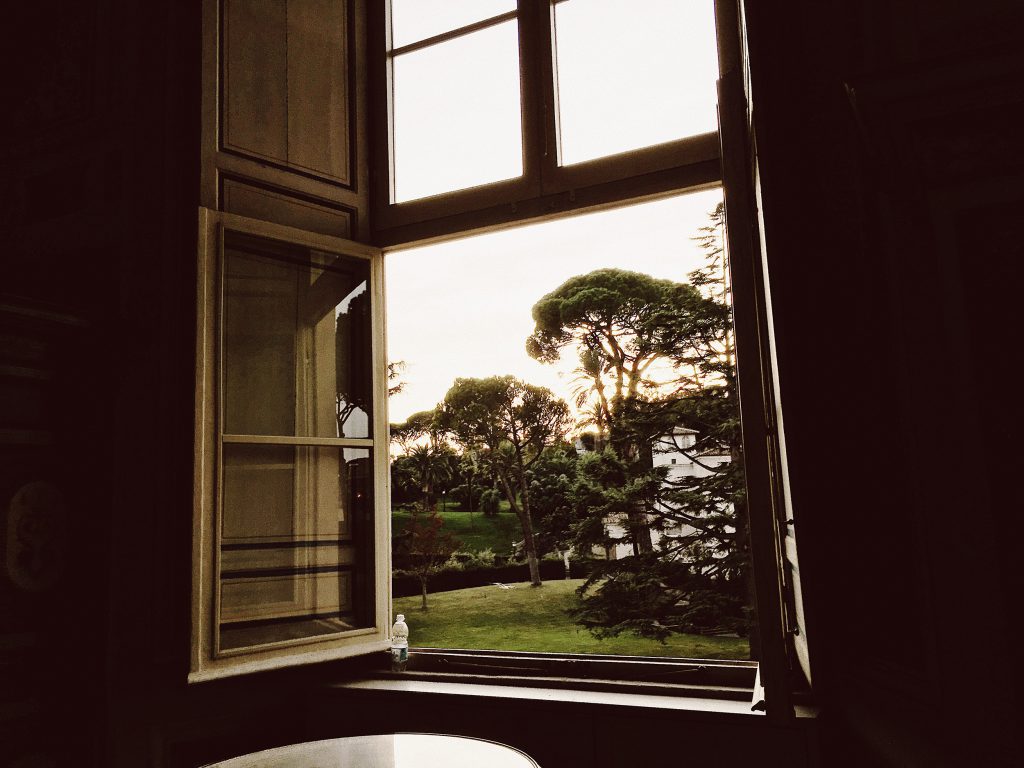
A new study from the UK highlights the importance of urban trees as a matter of health. The study, which combines research from England and New Zealand, concludes that people who can see trees from their window are happier and healthier – particularly in high density housing areas.

Now, New Zealand campaigners are citing the study to strengthen their argument for improved tree protection measures.

New Zealand’s Tree Council secretary, Dr Mels Barton says: “The link between people living at one property and valuing something else across the road comes out as so, so, important – and it’s not been demonstrated before,” she says. “We will definitely be waving [the report] around; there is not enough research into the benefits of urban trees.”

The study refers to the increase in physical and mental health conditions that result from urbanisation. It also presents evidence of how urban trees help combat these conditions by providing “indirect nature experiences”.

“With the rise in urban living, most people now spend much of their day indoors, therefore the green viewscape from home or from work often constitutes by far their most common nature experience. Having a room with a view of nature does not necessarily mean that people are continuously experiencing that view. Instead, people spend a significant amount of time with their attention directed towards specific tasks, and the presence of a window with a natural scene allows micro-restorative experiences, with scenes that are more fascinating being likely to be more restorative. There is robust evidence to suggest that indirect nature experiences provide a broad range of health and wellbeing benefits, including increased psychological wellbeing, improved cognitive function and concentration, reduced healing times and reduced stress at work,” it says.

Given the health benefits of urban trees, Dr Barton says the study supports the idea that trees belong to communities, not to individuals.

view from window PX3GNKY Citygreen

“Your tree is not just your tree,” she says. “It really belongs to those people who can see it. It really affects people’s well-being and it’s important to them. So, it shouldn’t be your right to make the decision to remove it. Trees are being removed every day. We want that to stop before it’s too late.”

The study also has implications for inner city streetscapes, as well as residential areas.

“The layout of cities and where we put specimen trees is really important”, says Dr Barton. “Auckland in particular has developed ad-hoc with all these pocket parks as development contributions that are too small to put a house on … they’re really of almost no benefit.”

The bottom line, according to Dr Barton, is that trees should be planted where they can be seen – and where their benefits can be enjoyed by many.

Load More...

“Great customer service, quick response times and a very in depth QA system with constant support.”

- Laura Wiesenekker, Project Engineer, Densford Civil -

“Citygreen is a very professional  business, and I found everything was great in terms of deliveries, product supply and information. It was all forthcoming and helped us to complete the project.”

- Keith Burns, Architect/Designer, Keith Burns Architect -

“Citygreen offered training and invaluable technical assistance during the works.”

- James Callan, Estimating Manager, Complex Co Pty Ltd -

“Our experience, in working with a Citygreen Design Studio was second to none. We found responses from the design studio to be very timely, and technically thorough. We went backwards and forwards a number of times, looking at different iterations of the design and, nothing was too much trouble to examine and explore different possibilities. I would highly recommend the Citygreen Design Studio to any future client considering using your services.”

- Sandra Smith, Principal Landscape Architect, City Of Monash -

“We are big on compliance on all projects, and the fact that their SmartCertify cloud platform covers all bases, and supports their 20 year warranties, is critical – especially that these pits are being installed under roadways and footpaths.”

- Johny Purkaystha, Civil Program Engineer, Central Coast Council -

"I reviewed all the previous projects that we have installed in the past couple years using your product and I can happily report back that we have 0% mortality in the soil cells, which is incredible!"

- Brendan Wilton, CEO, Trim Landscaping, Bedford, Canada -